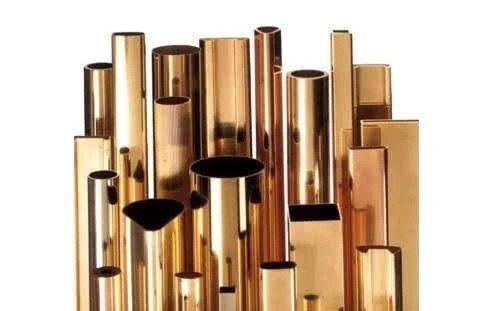

Introduction — The Condenser: Heart of the Power Plant
In every coal, gas, oil, nuclear and concentrated solar power plant, the steam surface condenser is the single largest heat exchanger in the entire facility. Its job is to condense the spent steam exhausted by the turbine back into liquid water — releasing its latent heat to the cooling medium (river water, seawater, cooling tower water or air) — so that the condensate can be recycled to the boiler and the thermodynamic cycle can continue. The efficiency of this process directly determines the plant's thermal efficiency and electricity output.
Inside every surface condenser sit thousands to tens of thousands of small-diameter metal tubes — typically 19.05 mm (¾ inch) or 25.4 mm (1 inch) OD — through which cooling water flows while steam condenses on the outer surface. The material of these tubes determines the condenser's corrosion performance, heat transfer efficiency, fouling resistance, maintenance cost and total service life. Get it wrong and you face unplanned shutdowns, costly retubing and lost generation revenue worth millions of dollars per year. Get it right and the condenser runs maintenance-free for 20–30 years.
For most of the past 100 years, copper alloys — specifically Admiralty Brass, Aluminium Brass and the Cupro-Nickel family — have been the materials of choice for power plant condenser tubing worldwide. This guide explains exactly which alloy is right for each type of plant and cooling water source, with full reference to all governing international standards.
Admiralty Brass C44300 — Cu 70%, Zn 29%, As 0.04% | ASTM B111
Aluminium Brass C68700 — Cu 76%, Zn 22%, Al 2%, As | ASTM B111
90/10 CuNi C70600 — Cu 88.6%, Ni 10%, Fe 1.4%, Mn 1% | ASTM B111
70/30 CuNi C71500 — Cu 68.5%, Ni 30%, Fe 0.7%, Mn 1% | ASTM B111
How a Steam Surface Condenser Works
Understanding tube material selection requires understanding the thermal and chemical demands placed on the tubes in service. A typical 500 MW coal-fired power plant condenser processes approximately 800–1,200 tonnes of steam per hour and circulates 40,000–80,000 m³/hour of cooling water through 25,000–50,000 individual tubes.
The key process parameters that define tube material requirements are:
- Tube-side fluid: Cooling water — river water, lake water, seawater, cooling tower recirculated water or brackish water. This is the corrosive medium that attacks the tube interior.
- Shell-side fluid: Pure steam condensate at vacuum conditions (typically 30–60 mbar absolute). The shell side is benign — condensate is deionised water — so shell-side corrosion is not the primary concern.
- Tube-side inlet temperature: Typically 15–35°C for once-through cooling; higher for cooling tower return.
- Tube-side outlet temperature: Typically 6–12°C higher than inlet, limited by the allowed condenser terminal temperature difference.
- Tube-side velocity: Typically 1.5–2.4 m/s — critical for both corrosion and heat transfer. Below 0.9 m/s → fouling and under-deposit corrosion. Above maximum → erosion-corrosion (alloy-dependent upper limit).
- Cooling water chemistry: pH, chloride content (ppm Cl⁻), dissolved oxygen (ppb), H₂S (ppb if coastal/polluted), suspended solids (mg/L), biological load (AFC — algae, mussels, barnacles).
Every 1°C rise in condenser outlet temperature due to fouling or flow restriction raises the turbine back-pressure and reduces plant output by approximately 0.3–0.8% of rated capacity. For a 500 MW plant, a 3°C fouling penalty means 1.5–4 MW of lost generation — costing $1–3 million per year at typical wholesale power prices. Tube material selection for fouling resistance is therefore directly linked to plant economics, not just corrosion management.
Why Copper Alloys Dominate Power Plant Condensers
Despite the availability of stainless steel, titanium, and other modern tube materials, copper alloys remain dominant in power plant condensers for three interconnected reasons:
- Thermal conductivity advantage: Admiralty Brass has a thermal conductivity of ~150 W/m·K versus ~15 W/m·K for titanium and ~14 W/m·K for 316L stainless steel. This 10× conductivity advantage allows copper alloy tubes to achieve the same overall heat transfer coefficient (U) at significantly thinner wall thicknesses or with fewer tubes — reducing condenser size and cost.
- Natural antifouling: Copper ions released from copper alloy surfaces in service act as a natural biocide — inhibiting the colonisation and attachment of marine organisms, algal biofilms and bacterial slimes that dramatically increase fouling resistance (the dominant long-term efficiency penalty in seawater-cooled condensers). Titanium and stainless steel have no biocidal effect and require chemical dosing or mechanical cleaning systems.
- Proven track record: Admiralty Brass condenser tubes have been in service in major power plants worldwide since the early 1900s. The material performance database, maintenance protocols, TEMA design data and inspection methodologies are all fully developed — reducing project engineering risk.
The practical consequence is that copper alloy tubes allow smaller, cheaper condensers that require less chemical treatment for fouling — a significant capital and operating cost advantage over titanium-based designs, partially offsetting copper alloy's lower service life in aggressive cooling water environments.
Admiralty Brass C44300 — The Century-Old Standard
Admiralty Brass C44300 Cu 70 / Zn 29 / As 0.04
UNS C44300 · EN CW706R · BS CZ111 · JIS C4430 · DIN CuZn28Sn1As
Admiralty Brass C44300 is the world's most widely used power plant condenser tube alloy — specified in more installed megawatts of thermal capacity than any other single tube material. Its combination of dezincification resistance (through As inhibition), good thermal conductivity, excellent drawability into thin-wall tube geometry, and low cost made it the global default for inland and coastal freshwater-cooled condensers throughout the 20th century.
Where Admiralty Brass Excels and Where It Fails
Best performance: Clean freshwater rivers and lakes; cooling tower recirculated water (low chloride); moderate-velocity systems (below 1.8 m/s tube-side); inland coal and gas-fired power stations away from coastal or estuarine water sources.
Failure modes in power plants:
- Erosion-corrosion: When tube-side velocity exceeds 1.8 m/s in seawater, the protective film breaks down at tube inlets and bends, causing localised wall thinning that can perforate a 18 BWG (1.24mm) tube within 2–5 years.
- H₂S attack: Coastal power stations near ports, harbours, estuaries or industrial discharges frequently have H₂S in the cooling water (from bacterial activity in sediment). Even traces of H₂S (0.01 ppm) cause Admiralty Brass film breakdown and rapid pitting failure. This is the single most common cause of premature Admiralty Brass condenser failure worldwide.
- Ammonia stress corrosion cracking: If steam-side contamination with ammonia occurs (from feedwater conditioning or condenser leaks), Admiralty Brass is susceptible to stress corrosion cracking (SCC) — sudden brittle fracture along grain boundaries.
Where arsenic is restricted by environmental regulation, Admiralty Brass is available with antimony (C44400) or phosphorus (C44500) as the dezincification inhibitor instead of arsenic. All three provide equivalent dezincification protection. ASTM B111 covers all three grades. BS 2871, JIS H3300 and DIN 1785 also specify equivalent As, Sb and P-inhibited grades.
Aluminium Brass C68700 — The High-Velocity Upgrade
Aluminium Brass C68700 Cu 76 / Zn 22 / Al 2 / As
UNS C68700 · EN CW702R · BS CZ110 · JIS C6870 · DIN CuZn20Al2As
Aluminium Brass C68700 was developed specifically to address the erosion-corrosion weakness of Admiralty Brass at higher velocities. The addition of 2% aluminium forms a more stable, adherent Al₂O₃-enriched protective film that resists the impingement attack that strips the Admiralty Brass film at tube inlets when velocity exceeds 1.8 m/s. It became the preferred upgrade specification at coastal and estuarine power stations during the 1960s–1990s where velocity constraints or higher-flow cooling systems made Admiralty Brass impractical.
Aluminium Brass vs Admiralty Brass — The Key Differences
| Parameter | Admiralty Brass C44300 | Aluminium Brass C68700 |
|---|---|---|
| Aluminium content | None | 2.0–2.8% |
| Protective film type | CuₓO + ZnO (moderate stability) | CuₓO + ZnO + Al₂O₃ (more stable, adherent) |
| Erosion-corrosion resistance | Good at <1.8 m/s; fails above | Good at <3.0 m/s; fails above |
| Dezincification resistance | Excellent (As inhibited) | Excellent (As inhibited) |
| H₂S resistance | Poor (<0.01 ppm) | Poor (<0.02 ppm) — marginally better |
| Thermal conductivity | 150 W/m·K ★ | 120 W/m·K |
| Cold drawability (thin-wall) | Excellent | Good — slightly harder to draw to very thin walls |
| Cost premium | Baseline | ~20% above Admiralty Brass |
| When to upgrade from C44300 to C68700 | — | When tube-side velocity regularly exceeds 1.8 m/s; when inlet erosion is observed after <5 years service with C44300 |
90/10 Cupro-Nickel C70600 — Modern Coastal Plant Standard
90/10 Cupro-Nickel C70600 Cu 88.6 / Ni 10 / Fe 1.4 / Mn 1
UNS C70600 · EN CW352H · BS CN102 · JIS C7060 · DIN CuNi10Fe1Mn
90/10 Cupro-Nickel C70600 represents a step-change in performance over the brass family — particularly in seawater and polluted coastal cooling water environments. The iron and manganese additions create a complex oxide film (principally a Cu-Ni-Fe oxyhydroxide) that is far more stable than any brass film in chloride environments. C70600 is today the standard specification for new-build coastal power plants, FPSO power modules and all marine applications where the cooling water quality may vary or deteriorate over the plant's 30-year design life.
Why CuNi outperforms brass alloys in seawater: The key is the iron addition (1.0–2.0% Fe in C70600). Iron is the critical ingredient that creates the superior protective film in seawater. Without iron, a binary CuNi alloy would perform only marginally better than brass. The Fe-enriched oxide film grows quickly on first exposure to clean seawater (film formation period: 6–8 weeks), after which the tube surface is effectively passivated against further corrosion even at velocities well above the safe limit for brass alloys.
New C70600 tubing takes approximately 6–8 weeks of clean seawater exposure to form its full protective film. During this period, the tubes are more vulnerable to corrosion — particularly from H₂S, ammonia and high-velocity impingement. Power plant operators should avoid chlorination and sulphide contamination during the first 8 weeks of service after new tube installation. After the film has formed, C70600 performs reliably in all normal seawater chemistries.
70/30 Cupro-Nickel C71500 — Premium Marine & Nuclear Grade
70/30 Cupro-Nickel C71500 Cu 68.5 / Ni 30 / Fe 0.7 / Mn 1
UNS C71500 · EN CW354H · BS CN107 · JIS C7150 · DIN CuNi30Mn1Fe
70/30 Cupro-Nickel C71500 is the premium grade in the copper-nickel family — containing 30% nickel versus the 10% in C70600. This higher nickel content delivers superior performance in the most challenging environments: highly polluted harbour waters with elevated H₂S, hypersaline brines in desalination condensers, and nuclear power plant secondary cooling circuits where absolute reliability over a 60-year plant life is a regulatory and safety requirement. It is also the standard for British Royal Navy and NATO warship condensers.
When to specify C71500 over C70600:
- Cooling water H₂S regularly exceeds 0.05 ppm (C70600 film begins breaking down)
- Power plant is in a sheltered harbour, estuary or port where stagnant, biologically active water is common
- Nuclear power plant with 60-year design life and no planned retubing in the plant lifecycle
- Offshore FPSO or platform where retubing is prohibitively expensive and service continuity is critical
- Naval or military application where system reliability is a non-negotiable operational requirement
Performance Ratings — Cost, Lifespan, Fouling, H₂S, Velocity
Thermal Conductivity (Higher = Better Heat Transfer)
Seawater Corrosion Resistance (Higher = Better)
Biofouling Resistance (Higher = Less Fouling)
Expected Service Life in Clean Seawater
Master Comparison Table — All Four Alloys
| Parameter | Admiralty Brass C44300 | Aluminium Brass C68700 | 90/10 CuNi C70600 | 70/30 CuNi C71500 |
|---|---|---|---|---|
| UNS Grade | C44300 | C68700 | C70600 | C71500 |
| Cu (%) | 70–73 | 76–79 | 86.5 min | 65.0 min |
| Key alloying elements | Zn 29, Sn 1, As 0.04 | Zn 22, Al 2, As 0.04 | Ni 10, Fe 1.4, Mn 1.0 | Ni 30, Fe 0.5–1.0, Mn 1.0 |
| Thermal conductivity (W/m·K) | 150 ★★★★★ | 120 ★★★★☆ | 40 ★★☆☆☆ | 29 ★★☆☆☆ |
| UTS (MPa) | 310–480 | 330–490 | 275–370 | 345–440 |
| Elongation (%) | 30–55 | 25–50 | 35–55 | 30–50 |
| Density (g/cm³) | 8.53 | 8.36 | 8.94 | 8.94 |
| Max velocity in seawater (m/s) | 1.8 | 3.0 | 3.5 ★ | 4.0 |
| Clean seawater resistance | ★★★☆☆ | ★★★★☆ | ★★★★★ | ★★★★★ |
| H₂S tolerance (ppm) | <0.01 | <0.02 | <0.1 | <0.5 ★ |
| Erosion-corrosion resistance | Moderate | Good | Very good | Excellent ★ |
| Dezincification resistance | Excellent (As) | Excellent (As) | N/A — no zinc | N/A — no zinc |
| Biofouling resistance | ★★★★☆ | ★★★★☆ | ★★★★★ | ★★★★★ |
| Cold drawability | Excellent | Good | Very good | Good |
| Service life — clean seawater | 8–15 years | 15–25 years | 20–30 years | 25–35 years ★ |
| Service life — freshwater/DM water | 15–25 years | 20–30 years | 30+ years | 40+ years |
| Material cost (× Admiralty Brass) | 1.0× ★ Lowest | 1.2× | 2.5–3.0× | 4.0–5.0× |
| Primary tube standard (ASTM) | ASTM B111 C44300 | ASTM B111 C68700 | ASTM B111 C70600 | ASTM B111 C71500 |
| U-bend tube standard | ASTM B395 C44300 | ASTM B395 C68700 | ASTM B395 C70600 | ASTM B395 C71500 |
| Typical power plant application | Inland freshwater plant; clean rivers/lakes | Coastal plant; moderate seawater; high velocity | Coastal / marine; most seawater conditions | Nuclear; naval; polluted seawater; H₂S environments |
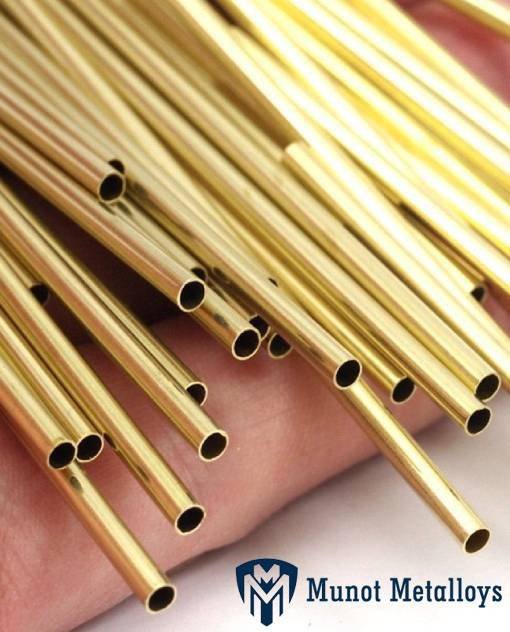
Admiralty Brass C44300 condenser tubes per ASTM B111 — the most widely used power plant condenser tube material globally. Melta Alloys supplies all four alloys with full ASTM B111 / BS 2871 / JIS H3300 certification.
Complete Standards Reference — ASTM, EN, BS, JIS, DIN, IS
| Standard | Product | Grades Covered | Key Notes |
|---|---|---|---|
| ASTM B111 | Seamless Copper Alloy Condenser & Heat Exchanger Tubes | C44300, C44400, C44500, C68700, C70600, C71500, C12200 | Primary global standard for all copper alloy power plant condenser tubing. Specifies chemical composition, mechanical properties (tensile, elongation), dimensional tolerances and hydrostatic test requirements. The single most referenced standard in power plant condenser specifications worldwide. |
| ASTM B395 | Seamless Copper Alloy U-Bend Heat Exchanger Tubes | C44300, C44400, C44500, C68700, C70600, C71500 | Covers pre-bent U-tubes for U-bundle heat exchangers and condensers. Specifies bend radius, ovality limits and residual stress requirements after bending. Critical for U-bundle condenser retrofit specifications. |
| ASTM B543 | Welded Copper Alloy Heat Exchanger Tubes | C44300, C68700, C70600, C71500 | Electric resistance welded (ERW) alternative to seamless per ASTM B111 — for large-diameter or cost-sensitive condenser applications. Less common than seamless in power plant service. |
| ASTM B251 | General Requirements — Copper & Alloy Tube | All B111 and B395 grades | Umbrella document defining dimensional tolerances, test methods (hydrostatic, flare, reverse bend, grain size) applicable to all condenser tube standards. |
| ASTM E243 | Eddy Current Examination — Copper and Alloy Tube | All copper alloy condenser tubes | Non-destructive test method for detection of defects in copper alloy tubing. Commonly specified alongside ASTM B111 for power plant condenser tube supply — required by many utilities in addition to hydrostatic testing. |
| BS 2871 Part 3 | Copper & Copper Alloy Tubes — Condensers & Heat Exchangers | CZ111 (Admiralty Brass), CZ110 (Al-Brass), CN102 (90/10 CuNi), CN107 (70/30 CuNi) | Definitive British Standard for power plant condenser tubes. Widely used in UK power stations, British-designed power plants worldwide (India, Middle East, Africa, Southeast Asia) and all projects under UK engineering management. Lists specific OD/BWG combinations and mechanical property requirements. |
| JIS H3300 | Copper & Copper Alloy Seamless Tubes | C4430 (Admiralty Brass), C6870 (Al-Brass), C7060 (90/10 CuNi), C7150 (70/30 CuNi) | Japanese Industrial Standard for copper alloy condenser tubes — specified for Japanese-designed power plants in Japan, Southeast Asia and South Korea. Uses metric OD/wall thickness combinations rather than BWG designation. |
| DIN 1785 | Seamless Copper Alloy Tubes for Heat Exchangers & Condensers | CuZn28Sn1As (Admiralty), CuZn20Al2As (Al-Brass), CuNi10Fe1Mn (90/10 CuNi), CuNi30Mn1Fe (70/30 CuNi) | German DIN standard for power plant condenser tubes — used in German-designed power plants globally. Metric dimensions; material designations by composition name rather than UNS number. |
| DIN 17664 | CuNi Alloy Tubes | CuNi10Fe1Mn (C70600), CuNi30Mn1Fe (C71500) | Separate DIN standard specifically for copper-nickel alloy tubes; supplements DIN 1785 with additional chemical and mechanical requirements for CuNi grades in marine and industrial service. |
| EN 12449 | Seamless Round Tubes — General Purpose | CW706R (Admiralty), CW702R (Al-Brass), CW352H (90/10 CuNi), CW354H (70/30 CuNi) | European standard — replaces individual DIN standards in EU countries. Specifies all four alloys in metric OD/wall combinations. Standard reference for European-financed or EU-regulated power projects. |
| EN 12450 | Seamless Round Tubes — Drawn | CW706R, CW702R, CW352H, CW354H | Precision-drawn variants of EN 12449 tubes — tighter dimensional tolerances for close-pitch tube bundle applications. |
| IS 1545 | Copper & Copper Alloy Condenser & Heat Exchanger Tubes | Admiralty Brass (Grade 1), Al-Brass (Grade 2), 90/10 CuNi (Grade 3), 70/30 CuNi (Grade 4) | Indian Standard for condenser tubes — specified for all NTPC, NPCIL, state utility and private sector power plants in India. Melta Alloys supplies all four grades to IS 1545 with BIS-compliant test certificates. |
| ISO 274 | Copper Alloy Seamless Round Tubes | Cu-DHP, CuNi10Fe1Mn, CuZn28Sn1As | International standard for copper alloy tubes — used as reference in international project specifications where no single national standard is preferred. |
Typical Tube Dimensions & BWG Wall Thicknesses
Power plant condenser tubes are specified by outside diameter (OD), wall thickness (BWG — Birmingham Wire Gauge or metric mm) and length. The most common combinations used globally are:
| OD (Inch) | OD (mm) | BWG | Wall Thickness (mm) | Tube-Side Area (cm²) | Typical Application |
|---|---|---|---|---|---|
| ¾" | 19.05 | 18 BWG | 1.245 | 1.98 | Most common condenser tube — Admiralty, Al-Brass, 90/10 CuNi |
| ¾" | 19.05 | 16 BWG | 1.651 | 1.80 | Higher pressure or thicker wall requirement — 90/10 CuNi in high-pressure service |
| ¾" | 19.05 | 20 BWG | 0.889 | 2.10 | Thin-wall for maximum heat transfer — Admiralty Brass in clean freshwater |
| 1" | 25.40 | 18 BWG | 1.245 | 3.71 | Large condenser bundles — 70/30 CuNi in nuclear plant |
| 1" | 25.40 | 16 BWG | 1.651 | 3.44 | Thicker wall for longer tube lengths and lower deflection |
| 5/8" | 15.88 | 18 BWG | 1.245 | 1.24 | Compact high-efficiency condensers — 90/10 CuNi in offshore/FPSO |
| 20 mm | 20.00 | — | 1.0 / 1.25 / 1.5 | 2.38 | Metric sizes per EN 12449 / JIS H3300 / DIN 1785 for European & Japanese-designed plants |
Standard tube length is 6,096 mm (20 feet) in ASTM B111; 6,000 mm in EN/DIN specifications. Tubes up to 12,192 mm (40 feet) or 12,000 mm are available for large utility condensers — longer tubes reduce the number of tube joints and improve bundle efficiency.
Biofouling & Macrofouling — The Hidden Cost Driver
Biofouling in power plant condenser tubes takes two forms, each with different impacts on tube material selection:
Microfouling (Biofilm)
Bacterial biofilms form on tube inner surfaces within days of cooling water contact. A biofilm of only 0.1 mm thickness can reduce overall heat transfer coefficient U by 10–25% and simultaneously create the anaerobic under-deposit conditions that cause sulphate-reducing bacteria (SRB) to produce H₂S — accelerating dezincification in brass tubes and potentially causing selective corrosion even in CuNi tubes. Copper alloys' natural biocidal copper ion release provides significant — though not absolute — resistance to biofilm formation compared to stainless steel or titanium.
Macrofouling (Mussels, Barnacles, Oysters, Jellyfish)
Marine macro-organisms that reach the condenser tube bundle can cause complete tube blockage, leading to tube vibration (flow-induced), impingement erosion at the tube inlet, and tube collapse failure in severe cases. The copper content of 90/10 and 70/30 CuNi releases sufficient Cu²⁺ ions (typically 5–25 ppb at tube surfaces) to deter mussel and barnacle attachment. This is the primary reason why CuNi-tubed condensers in coastal power plants can often operate continuously between planned outages without mechanical tube cleaning — while stainless steel or titanium-tubed condensers require automated tube-cleaning systems (Taprogge balls, brushes or high-pressure lancing) to maintain thermal performance.
Lifecycle Cost Analysis — True Cost per Year of Service
The apparent cost advantage of Admiralty Brass over 90/10 CuNi (ratio 1.0× vs 2.5–3.0×) reverses when lifecycle costs are included for seawater-cooled plants. A simplified lifecycle analysis for a 500 MW coastal power plant condenser with 40,000 tubes:
| Cost Element | Admiralty Brass C44300 | 90/10 CuNi C70600 | 70/30 CuNi C71500 |
|---|---|---|---|
| Initial tube material cost (relative) | $1.0M (baseline) | $2.5–3.0M | $4.0–5.0M |
| Expected service life in seawater | 8–12 years | 22–30 years | 28–35 years |
| Number of retubing events in 35 years | 3–4 retubing events | 1–1.5 retubing events | 1 retubing event (end-of-life) |
| Total tube material cost over 35 years | $3.5–4.0M | $3.0–4.5M | $4.0–5.0M |
| Retubing labour & shutdown cost per event | $2.5–4.0M × 3 = $7.5–12M | $2.5–4.0M × 1.25 = $3.1–5.0M | $2.5–4.0M × 1 = $2.5–4.0M |
| Lost generation (14 days/retubing × $/MWh) | $3.0–5.0M per event × 3 = $9–15M | $3.0–5.0M × 1.25 = $3.75–6.25M | $3.0–5.0M × 1 = $3–5M |
| Chemical treatment (anti-fouling dosing) | $0.5M/year × 35 = $17.5M | $0.2M/year × 35 = $7.0M | $0.15M/year × 35 = $5.25M |
| Estimated total lifecycle cost over 35 years | $37–46M | $17–21M ★ | $15–19M ★ |
Note: Figures are illustrative estimates for comparison purposes. Actual costs vary by plant size, location, shutdown duration and electricity market price. Consult plant engineering and procurement teams for site-specific analysis.
As the table shows, 90/10 CuNi C70600, despite costing 2.5–3.0× Admiralty Brass for the initial tube purchase, delivers the lowest total lifecycle cost for seawater-cooled coastal power plants over a 35-year plant life — primarily because it eliminates 2–3 retubing events and reduces chemical treatment requirements. This is why every major power utility that has conducted a formal lifecycle cost analysis for coastal plant condensers has progressively upgraded from Admiralty Brass to CuNi alloys.
Retubing vs Replacement — When to Upgrade the Alloy
When a condenser requires retubing due to tube failures, corrosion or end-of-life performance, the retubing event is an opportunity to upgrade the alloy grade — particularly relevant for plants that are expected to continue operating beyond the next tube bundle's service life. Key decision criteria for alloy upgrade at retubing:
H₂S increasing in cooling water
Coastal environmental change has introduced H₂S contamination — Admiralty Brass is failing prematurely. Next retubing should upgrade to 90/10 or 70/30 CuNi.
Plant life extension beyond 25 years
Plant originally designed for 25 years is being extended to 40 years. Admiralty Brass at end of second service life should be replaced with CuNi to avoid a third retubing.
Velocity increase due to pump upgrade
New circulating water pumps have increased tube-side velocity above 2 m/s — Aluminium Brass showing inlet erosion. Upgrade to CuNi which has no velocity concern below 3.5 m/s.
New industrial discharge upstream
Industrial effluent (H₂S, ammonia, heavy metals) entering cooling water source. Any brass alloy is at risk. CuNi or Titanium now appropriate.
Important: When upgrading alloy grade at retubing, also replace the tube sheets (or verify their compatibility with the new tube material to avoid galvanic corrosion at the tube-to-tubesheet joint). Admiralty Brass tube sheets with CuNi tubes can cause galvanic attack on the brass in seawater — specify CuNi or Naval Brass tube sheets per ASTM B171 when upgrading to CuNi tubes.
How to Specify Power Plant Condenser Tubes
A complete condenser tube specification for procurement must include:
- Material standard and grade: e.g. ASTM B111 C44300 or ASTM B111 C70600
- Outside Diameter (OD): e.g. 19.05 mm (¾ inch) or 25.40 mm (1 inch)
- Wall thickness: e.g. 18 BWG (1.245 mm) per ASTM B111 Table 1
- Length: e.g. 6,096 mm (20 ft) ± tolerance per ASTM B251
- Condition/temper: e.g. Annealed (O61) for straight tubes; drawn (H55) for U-bends per ASTM B395
- Grain size (if required): e.g. Average grain size 0.025–0.060 mm per ASTM E112 (commonly required for Admiralty Brass and Al-Brass to ensure proper drawability and corrosion resistance)
- Test requirements:
- Hydrostatic test per ASTM B111
- Eddy current examination per ASTM E243 (100% of tubes if specified by utility)
- Reverse bend test per ASTM B251
- Flare test per ASTM B251
- Chemical analysis — spectrometric per heat/lot
- Mechanical tests (tensile, elongation) per heat/lot
- Certification: EN 10204 Type 3.1 Mill Test Certificate (most utilities require 3.1); Type 3.2 (third-party inspection) if specified
- Third-party inspection: SGS / Bureau Veritas / TÜV / Lloyd's Register / any client-nominated agency at Melta Alloys' facility
- Applicable piping code: ASME B31.1 (power piping), ASME Section VIII (pressure vessels), or applicable national code
- TEMA class: R, B or C — determines minimum wall thickness in TEMA design calculations
- Quantity: Total length in meters or number of tubes per length
Frequently Asked Questions
Why does 90/10 CuNi have lower thermal conductivity than Admiralty Brass but is still widely specified for new power plants?
The thermal conductivity disadvantage of 90/10 CuNi (40 W/m·K) versus Admiralty Brass (150 W/m·K) is a real engineering consideration, but it is mitigated in two ways: first, CuNi tubes can be supplied in thinner walls (18–20 BWG) because they are not subject to the erosion-corrosion wall thinning that limits how thin brass tubes can be safely drawn; second, the overall heat transfer coefficient U in a condenser is determined not just by tube metal conductivity but also by coolant-side and steam-side film coefficients and fouling resistance — and CuNi's dramatically better antifouling performance means that its effective U value over a 5–10 year operating period is often higher than Admiralty Brass (whose tubes are increasingly fouled). The lifecycle thermal and economic performance of CuNi therefore exceeds Admiralty Brass in virtually every coastal seawater application.
What is the most common cause of Admiralty Brass condenser tube failure in coastal power plants?
The three most common failure mechanisms, in order of frequency globally, are: (1) H₂S-induced film breakdown and pitting — caused by sulphide contamination from harbour sediment or industrial discharge; (2) inlet-end erosion-corrosion — caused by tube-side velocity exceeding 1.8 m/s at the tube inlet face where the flow transitions from the water box to the tube bore, creating turbulence that strips the protective film; and (3) ammonia stress corrosion cracking — caused by ammonia contamination of the steam-side condensate, typically from feedwater amine treatment chemicals or from nitrogen oxide ingress.
Can I mix Admiralty Brass and CuNi tubes in the same condenser?
Technically possible but not recommended. Galvanic coupling between dissimilar copper alloys in seawater can drive preferential corrosion of the anodic material (Admiralty Brass is anodic relative to CuNi in seawater). If a phased retubing is required for budget reasons, segregate the alloys by water box (each pass all one alloy) rather than mixing within a single tube pass, and ensure the tube sheets in each zone are compatible with the local tube alloy.
Does Melta Alloys supply condenser tubes to Indian power sector standards (IS 1545)?
Yes — Melta Alloys supplies all four copper alloy grades (Admiralty Brass C44300, Aluminium Brass C68700, 90/10 CuNi C70600, 70/30 CuNi C71500) to IS 1545 for the Indian power sector, as well as to ASTM B111, BS 2871 Part 3, JIS H3300, DIN 1785 and EN 12449 for international projects. All tubes are supplied with EN 10204 Type 3.1 Mill Test Certificates covering chemical analysis, mechanical tests, hydrostatic test reports and dimensional inspection. Eddy current examination per ASTM E243 and third-party inspection by any nominated agency can be arranged.
What is the minimum order quantity (MOQ) for condenser tubes from Melta Alloys?
For standard sizes in ASTM B111 (¾" × 18 BWG and 1" × 18 BWG in Admiralty Brass and 90/10 CuNi), Melta Alloys can supply from 500 kg. For non-standard sizes, special wall thicknesses or grades such as 70/30 CuNi or Aluminium Brass, a minimum of 1 metric tonne is typically required. Contact our sales team with your full tube specification for a detailed quotation with lead time.