Introduction — The Steel Replacement No One Expected
When engineers in the offshore, marine, chemical and subsea industries began discovering that a copper alloy could match the tensile strength of medium-carbon steel while outperforming it on corrosion resistance by an enormous margin, it quietly changed the material selection landscape for some of the world's most demanding applications. That alloy is Aluminium Bronze C63000 — a copper-aluminium-nickel-iron alloy with a remarkable combination of properties that no single alloy in the steel or stainless steel family can simultaneously deliver.
This article provides a complete technical guide to C63000 — covering its alloy chemistry, mechanical properties, international standard designations, product forms and the specific applications where it has become the definitive material of choice over carbon steel, duplex stainless steel and other copper alloys.
UNS: C63000 | EN: CW307G (CuAl10Ni5Fe4) | BS: CA104 | DIN: CuAl10Ni5Fe4
Composition: Cu ~82% / Al 9–11% / Ni 4–5.5% / Fe 2–4%
UTS: 655–760 MPa | Yield: 275–415 MPa | Hardness: 170–220 HB
Primary wrought standard: ASTM B150 (round bar) | Cast: ASTM B148 / C95800
The Aluminium Bronze Family
Aluminium Bronzes are copper alloys containing 5–12% aluminium as the primary alloying element, with additional iron, nickel, manganese and silicon additions that tailor properties for specific applications. They form two broad categories:
Binary Al-Bronze
Cu+Al only (e.g. C61400 — 7% Al). Moderate strength. Good formability for sheet and strip.
Fe-bearing Al-Bronze
Cu+Al+Fe (e.g. C62400). Improved strength and wear. Bearings, bushings, marine hardware.
Ni-Al-Bronze (C63000) ★
Cu+Al+Ni+Fe. Highest strength in wrought form. Marine propellers, offshore, valve bodies, subsea.
Cast Ni-Al-Bronze
C95800 (cast equivalent). Ship propellers, pump impellers, sea valves — produced by sand casting per ASTM B148.
Chemical Composition of C63000
| Element | C63000 (Wrought) | Function |
|---|---|---|
| Copper (Cu) | Remainder (~79–84%) | Base metal; provides corrosion resistance and conductivity |
| Aluminium (Al) | 9.0 – 11.0% | Primary strengthener; forms protective Al₂O₃ surface layer |
| Nickel (Ni) | 4.0 – 5.5% | Refines grain structure; significantly improves strength and corrosion resistance in seawater |
| Iron (Fe) | 2.0 – 4.0% | Grain refiner; increases hardness, wear resistance and response to heat treatment |
| Manganese (Mn) | max 1.5% | Deoxidiser; improves toughness |
| Silicon (Si) | max 0.25% | Impurity limit |
| Lead (Pb) | max 0.02% | Strictly limited — lead impairs ductility in Al-Bronze |
| Zinc (Zn) | max 0.30% | Impurity limit |
Mechanical & Physical Properties
| Property | C63000 Wrought (ASTM B150) | C95800 Cast (ASTM B148) |
|---|---|---|
| Tensile Strength (UTS) | 655 – 760 MPa (95–110 ksi) | 586 – 690 MPa (85–100 ksi) |
| Yield Strength (0.2%) | 275 – 415 MPa (40–60 ksi) | 241 – 345 MPa (35–50 ksi) |
| Elongation (%) | 15 – 25% | 12 – 20% |
| Hardness (Brinell) | 170 – 220 HB | 159 – 192 HB |
| Hardness (Rockwell B) | 87–99 HRB | 82–95 HRB |
| Elastic Modulus | 116 GPa (16.8 × 10⁶ psi) | 110 GPa |
| Density | 7.58 g/cm³ | 7.64 g/cm³ |
| Thermal Conductivity | 42 W/m·K | 39 W/m·K |
| Coefficient of Thermal Expansion | 16.2 × 10⁻⁶/°C | 16.0 × 10⁻⁶/°C |
| Magnetic Permeability | Non-magnetic (≈1.0) | Non-magnetic |
| Machinability Rating | 20% (vs C36000 free-cut brass = 100%) | 42% |
| Max Service Temperature | 400°C continuous | 370°C |
| Fatigue Strength (10⁸ cycles) | ~240 MPa | ~207 MPa |
Corrosion Resistance — The Full Picture
The outstanding corrosion resistance of C63000 aluminium bronze arises from a thin, dense, self-repairing aluminium oxide (Al₂O₃) film that forms instantly on the surface when exposed to oxygen — even in seawater, acids and industrial process fluids. Unlike steel's iron oxide (rust), this film is non-porous, tenacious and actually regenerates after mechanical damage, giving C63000 a fundamentally different corrosion mechanism than ferrous materials.
- Seawater and brine: Excellent. C63000 is one of the few engineering alloys that retains near-full strength and corrosion resistance in seawater at high velocities (up to 3.5 m/s), far exceeding Naval Brass, Admiralty Brass and even some stainless steels.
- Erosion-corrosion resistance: Outstanding. The hardness and tenacity of the Al₂O₃ film makes C63000 highly resistant to impingement attack by cavitation, sand-laden seawater and high-velocity flow — properties critical for propellers and pump impellers.
- Sulphide-polluted seawater: C63000 outperforms most copper alloys in polluted port waters where H₂S is present — where Cupro-Nickel would fail, C63000 remains stable.
- Acids: Resistant to most dilute acids; not suitable for oxidising acids (nitric, concentrated sulphuric) or hydrofluoric acid.
- Ammonia: Avoid — like all copper alloys, aluminium bronze is susceptible to stress corrosion cracking in ammoniacal environments.
- Biofouling: Copper-alloy antifouling effect — marine organisms (barnacles, algae) have difficulty colonising C63000 surfaces, reducing maintenance costs on marine hardware.
C63000 aluminium bronze is both non-sparking and non-magnetic — two properties that make it invaluable in hazardous area equipment (ATEX environments), explosive ordnance disposal tools, and military vessel applications where magnetic signature must be minimised. No stainless steel or carbon steel can offer both of these properties simultaneously.
C63000 vs Medium Carbon Steel vs Stainless Steel
| Property | C63000 Aluminium Bronze | AISI 4140 Carbon Steel | 316L Stainless Steel | Duplex 2205 |
|---|---|---|---|---|
| Tensile Strength | 655–760 MPa | 655–1035 MPa (HT) | 485–690 MPa | 620–795 MPa |
| Yield Strength | 275–415 MPa | 414–862 MPa (HT) | 170–450 MPa | 448–550 MPa |
| Seawater corrosion | ★★★★★ Excellent | ★☆☆☆☆ Rusts rapidly | ★★★☆☆ Pitting risk | ★★★★☆ Good |
| Crevice corrosion | ★★★★★ Immune | ★☆☆☆☆ Severe | ★★☆☆☆ Susceptible | ★★★☆☆ Moderate |
| Erosion-corrosion resistance | ★★★★★ Exceptional | ★★★☆☆ Moderate | ★★★☆☆ Moderate | ★★★☆☆ Good |
| Biofouling resistance | ★★★★★ Excellent | ★☆☆☆☆ None | ★★☆☆☆ Poor | ★★☆☆☆ Poor |
| Non-magnetic | ✔ Yes | ✘ Magnetic | ✔ Mostly | ✘ Slightly magnetic |
| Non-sparking | ✔ Yes | ✘ No | ✘ No | ✘ No |
| Density (g/cm³) | 7.58 | 7.85 | 7.99 | 7.82 |
| Machinability | 20% (requires carbide tools) | 60–70% | 40–55% | 30–45% |
| Weldability | Good (TIG/MIG) | Good (SMAW/GMAW) | Excellent | Good |
| Typical cost/kg (relative) | High | Low | Medium | High |
While C63000 has a higher initial material cost than carbon steel, the total life-cycle cost is almost always lower in marine and corrosive service. Carbon steel in seawater requires cathodic protection, epoxy coating, regular inspection and replacement typically within 5–15 years. C63000 aluminium bronze components in the same environments routinely achieve 25–40 year service lives with minimal maintenance — making it cheaper per year of service in most subsea and marine applications.
C63000 vs Other Bronze Alloys
| Alloy | UNS | UTS (MPa) | Key Advantage | Limitation vs C63000 |
|---|---|---|---|---|
| Tin Bronze | C90300 / C90500 | 240–310 | Excellent bearing properties; cheaper | Much lower strength; not for structural |
| Phosphor Bronze | C51000 / C52100 | 310–520 | Spring properties; electrical connectors | Lower strength; poor in high-velocity seawater |
| Binary Al-Bronze | C61400 / C62400 | 480–600 | Better machinability; lower cost | Lower strength; no nickel — less seawater resistance |
| Ni-Al-Bronze C63000 ★ | C63000 | 655–760 | Highest strength+corrosion resistance in bronze family | Higher cost; requires carbide tooling for machining |
| Ni-Al-Bronze Cast | C95800 | 586–690 | Complex shapes; ship propellers; pump housings | Lower strength than wrought C63000 |
| Manganese Bronze | C67820 (HTB3) | 620–770 | Excellent for gears; high tensile strength | Higher dezincification risk; more complex corrosion behaviour |
International Standards for Aluminium Bronze C63000
| Standard | Product | Details |
|---|---|---|
| ASTM B150 | Aluminium Bronze Rod, Bar & Shapes (Wrought) | Primary standard for C63000 wrought rod and bar — round, hex, square and flat bar for machined components |
| ASTM B169 | Aluminium Bronze Sheet, Strip, Plate & Rolled Bar | C63000 plate and sheet for cladding, wear plates and marine hull inserts |
| ASTM B171 | Copper Alloy Plate & Sheet for Pressure Vessels & Heat Exchangers | C63000 plate approved for pressure vessel and heat exchanger tubesheet applications |
| ASTM B124 / ASME SB124 | Copper & Copper Alloy Forging Rod, Bar & Shapes | C63000 forging stock — wrought material for subsequent hot die forging into valve bodies, flanges |
| ASTM B283 | Copper & Copper Alloy Die Forgings | Aluminium bronze die forgings — valve bodies, pump housings, flanges and structural fittings |
| ASTM B148 | Aluminium Bronze Sand Castings | Cast C95800 (Ni-Al-Bronze) — ship propellers, sea chest valves, pump impellers (closest cast equivalent to C63000) |
| ASTM B505 | Continuous Cast Copper Alloy Rod, Bar & Tube | Continuously cast aluminium bronze bar for bearing and bushing blanks |
| ASTM B271 | Centrifugal Cast Brass & Bronze Alloy Castings | Centrifugal cast Al-Bronze cylinders, sleeves, bearing housings and ring gears |
| EN 12163 | Copper Alloy Rods for General Purposes | CW307G (CuAl10Ni5Fe4) round and profile bars — European standard for C63000 rod |
| EN 12164 | Rods for Free Machining | CW307G free-machining rod — European market (with controlled lead for better chip breaking) |
| EN 12165 | Wrought & Unwrought Forgings | CW307G aluminium bronze forgings per European standard — flanges, valve bodies |
| EN 12167 | Profiles & Rectangular Bars | CW307G flat bar and structural profiles for wear liners and guide rails |
| EN 1652 | Plate, Sheet, Strip & Circles | CW307G aluminium bronze plate and sheet per European standard |
| EN 1982 | Copper Alloy Castings | CC333G (CuAl10Ni5Fe4) cast aluminium bronze — marine sand and centrifugal castings per European standard |
| DIN 17665 | Aluminium Bronze Rods, Bars & Profiles | CuAl10Ni5Fe4 (DIN) — German market rod and bar specification for aluminium bronze |
| BS 2870 | Rolled Copper Alloy Sheet, Strip & Foil | CA104 (BS designation for C63000) sheet and strip |
| BS 2874 | Copper Alloy Rods & Sections | CA104 (BS C63000) round, hex and flat bars — British Standard for aluminium bronze machining stock |
| BS 2872 | Copper Alloy Forgings | CA104 (C63000) die forgings — valve bodies, marine flanges per British Standard |
| BS 1400 | Copper Alloy Ingots & Castings | AB2 (BS cast Al-Bronze) sand castings — marine pump casings and ship propellers per British Standard |
| JIS H3100 | Copper Alloy Sheet & Plate | C6301 (JIS) aluminium bronze plate and sheet |
| JIS H3250 | Copper Alloy Rod & Bar | C6301 (JIS) aluminium bronze round and hex bar |
| JIS H5111 | Copper Alloy Castings | CAC703 (JIS) cast nickel-aluminium bronze — ship propellers and marine castings |
| ASME B16.5 | Pipe Flanges | C63000 aluminium bronze flanges — Class 150 to 1500, all facing types |
| ASME B16.9 | Wrought Fittings | C63000 aluminium bronze elbows, tees and reducers for marine and chemical piping |
| EN 1092-1 | Flanges — European Standard | C63000 / CW307G flanges per European flange standard for offshore and marine use |
Product Forms & Standards Matrix
| Product Form | Available Grades | Key Standards |
|---|---|---|
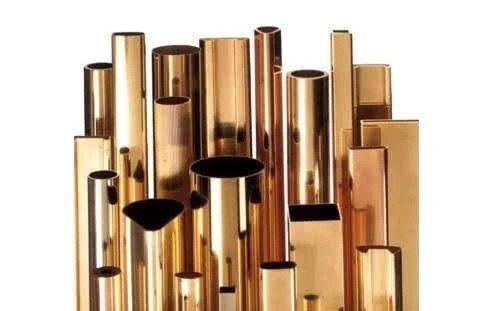
| Round Bars & Rods | C63000 wrought | ASTM B150 ASTM B124 EN 12163 BS 2874 CA104 DIN 17665 JIS H3250 C6301 |
| Hex Bars | C63000 | ASTM B150 EN 12163 BS 2874 |
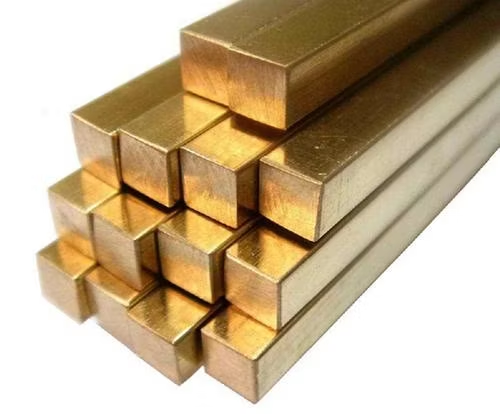
| Flat Bars & Profiles | C63000 | ASTM B169 EN 12167 BS 2874 |
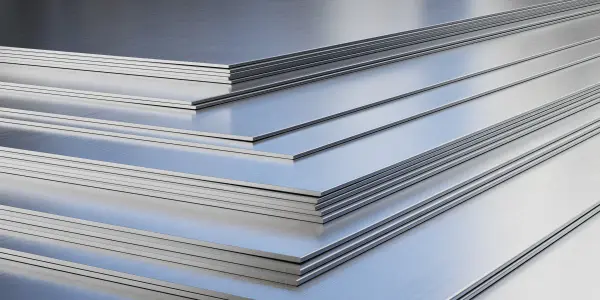
| Plates & Sheets | C63000 | ASTM B169 ASTM B171 EN 1652 BS 2870 JIS H3100 |
| Die Forgings | C63000 | ASTM B283 ASTM B124 EN 12165 BS 2872 CA104 |
| Sand Castings | C95800 (cast equiv.) | ASTM B148 EN 1982 CC333G BS 1400 AB2 JIS H5111 CAC703 |
| Continuous Cast Bar | C63000 / C95800 | ASTM B505 ASTM B271 |
| Flanges | C63000 forged | ASME B16.5 ASME B16.47 EN 1092-1 DIN 2501 JIS B2220 |
| Fittings | C63000 forged | ASME B16.9 EN 1092-1 MSS SP-104 |
Applications — Where C63000 Replaces Steel
- Ship propeller shafts and shaft sleeves: C63000 replaces stainless steel and carbon steel — higher seawater corrosion resistance, non-magnetic, antifouling. Wrought C63000 per ASTM B150; cast propellers in C95800 per ASTM B148.
- Subsea valve bodies and bonnets: C63000 die forgings per ASTM B283 and EN 12165 replace Duplex SS in cost-sensitive subsea valve applications.
- Offshore pump impellers and casings: Cast C95800 per ASTM B148 — used in seawater lift pumps, ballast pumps and fire suppression pumps aboard FPSOs.
- Non-sparking tools and equipment: C63000 bars per ASTM B150 — machined into wrenches, hammers, chisels for use in ATEX hazardous zones (explosive atmospheres).
- Marine bushings, bearings and thrust washers: Continuous cast C63000 / C95800 per ASTM B505 — centrifugal cast sleeves per ASTM B271. Self-lubricating properties in seawater service.
- Seawater piping flanges and fittings: C63000 flanges per ASME B16.5, EN 1092-1 — replacing carbon steel flanges that require cathodic protection and frequent painting.
- Rudder and stabiliser components: C63000 plates per ASTM B169 / ASTM B171 for rudder pintles, gudgeons and retaining plates.
- Chemical process equipment: C63000 valve bodies and pipe fittings in dilute acid, alkali and saline environments where 316L stainless steel suffers chloride pitting.
- Oil & gas subsea architecture: C63000 structural pins, connectors and wear pads in umbilical systems and subsea production trees — non-magnetic property prevents interference with magnetic ROV navigation systems.
- Military and naval vessels: C63000 for non-magnetic mine countermeasure vessel fittings, acoustic quieting components and underwater propulsion hardware.
Aluminium Bronze C63000 / C95800 pipe fittings and flanges per ASTM B148, ASME B16.5 — for offshore seawater systems
Machining, Welding & Fabrication Notes
Machining C63000
C63000 is significantly harder than standard brass and bronze — requiring carbide or ceramic cutting tools, moderate speeds, high feed rates and copious flood coolant. Machinability is rated at approximately 20% (compared to free-cutting brass C36000 = 100%). Despite this, C63000 produces excellent surface finishes and tight tolerances in CNC turning and milling operations. Key machining tips:
- Use coated carbide inserts (TiAlN or TiN coating recommended)
- Cutting speed: 60–150 m/min for turning; 30–80 m/min for milling
- Avoid work hardening: maintain continuous cutting — don't allow the tool to rub
- Flood coolant or mist coolant (water-soluble oil) recommended
Welding C63000
C63000 aluminium bronze is weldable by TIG (GTAW) and MIG (GMAW) processes using ERCuAl-A2 filler wire (AWS A5.7). Preheat at 150–260°C is recommended for sections above 12mm. Post-weld heat treatment (annealing at 600°C followed by water quench) improves corrosion resistance of the weld zone. Avoid brazing with phosphor-copper filler — use silver-based filler (BAg series) where brazing is necessary.
Frequently Asked Questions
What is the difference between C63000 and C95800?
C63000 is the wrought (worked) form — produced by extrusion, rolling and drawing into bars, plates and shapes per ASTM B150, ASTM B169. C95800 is the cast equivalent — produced by sand casting, centrifugal casting or continuous casting per ASTM B148, ASTM B271, ASTM B505. C63000 wrought typically has ~10–15% higher tensile strength than C95800 cast due to the denser, more refined wrought microstructure. Ship propellers are almost always C95800 cast; shaft sleeves, bars and machined components are C63000 wrought.
Can C63000 be used at elevated temperatures?
Yes — C63000 retains useful mechanical properties up to approximately 400°C in continuous service, making it suitable for hot seawater service, process industry applications involving warm brine or steam condensate, and exhaust system fittings on marine diesel engines. Above 400°C, the alpha-beta microstructure begins to degrade and alternative alloys should be considered.
Does Melta Alloys supply C63000 bars per ASTM B150 with full MTCs?
Yes — Melta Alloys supplies C63000 aluminium bronze round bars (6mm–250mm diameter), hex bars, flat bars and plates per ASTM B150, ASTM B169, EN 12163 CW307G, BS 2874 CA104 and DIN 17665 with full EN 10204 Type 3.1 Mill Test Certificates. Third-party inspection and NAMLT/dezincification testing available on request.