Why Marine Engineers Reach for AA5083
When a shipyard engineer, offshore platform designer or naval architect faces the material selection challenge of combining low weight, structural strength, seawater corrosion resistance and weldability in a single alloy — the answer is almost always AA5083. It is not an accident that AA5083 has become the most widely specified aluminium alloy in shipbuilding, offshore construction, pressure vessels and cryogenic storage worldwide. This article explains the metallurgical reasons behind its dominance and provides the complete standard reference guide for procurement and engineering teams.
UNS: A95083 | EN: EN AW-5083 (AlMg4.5Mn0.7) | JIS: A5083 | BS: N8 | IS: 24345
Tensile Strength (H116): 305–380 MPa | Density: 2.66 g/cm³ | Conductivity: 29% IACS
Primary standard: ASTM B209 (plate/sheet), ASTM B241 (tube), ASTM B221 (extrusion)
Chemical Composition & Alloy Family
AA5083 belongs to the 5xxx series of aluminium-magnesium alloys — the marine series. Its exceptional performance in seawater comes directly from its relatively high magnesium content (4.0–4.9%), combined with manganese and chromium additions that refine the grain structure and improve corrosion resistance.
| Element | Min (%) | Max (%) | Function |
|---|---|---|---|
| Aluminium (Al) | Remainder | — | Base metal |
| Magnesium (Mg) | 4.0 | 4.9 | Primary strengthener; enhances seawater corrosion resistance |
| Manganese (Mn) | 0.40 | 1.0 | Grain refiner; improves strength and corrosion resistance |
| Silicon (Si) | — | 0.40 | Impurity limit |
| Iron (Fe) | — | 0.40 | Impurity limit |
| Chromium (Cr) | 0.05 | 0.25 | Inhibits recrystallisation; improves weld zone properties |
| Copper (Cu) | — | 0.10 | Strictly limited — higher Cu reduces seawater corrosion resistance |
| Zinc (Zn) | — | 0.25 | Strictly limited — higher Zn causes stress corrosion cracking |
| Titanium (Ti) | — | 0.15 | Grain refiner during casting |
The 5xxx Marine Series — Where AA5083 Sits
AA5052
Al-Mg 2.5% — General purpose marine alloy; moderate strength; good formability. Used for boat hulls, fuel tanks, pressure vessels. ASTM B209
AA5083 ★
Al-Mg 4.5% — Primary structural marine alloy; highest strength in 5xxx; best seawater resistance. Ships, offshore platforms, pressure vessels. ASTM B209 ASTM B241
AA5086
Al-Mg 4.0% — Between 5052 and 5083; good formability; marine use. Less common than 5083. ASTM B209
AA5454
Al-Mg 2.7% — Better performance than 5052 in elevated temperature; road tankers, pressure vessels. ASTM B209
AA5754
Al-Mg 3.1% — European marine alloy; automotive and marine sheet. EN 485 EN 573
AA5059
Al-Mg 5.0-6.0% — Higher strength variant of 5083 for naval vessels (bulletproof hulls). ASTM B209
Mechanical Properties Across Tempers
AA5083 is a non-heat-treatable alloy — its strength is achieved through strain hardening (cold work) and stabilisation, not precipitation hardening. The most important tempers for marine and structural applications are:
| Temper | Condition | UTS (MPa) | YS 0.2% (MPa) | Elongation (%) | Primary Use |
|---|---|---|---|---|---|
| O | Fully annealed | 270–350 | 110–165 | 16–25 | Maximum formability; deep drawing, cold forming |
| H111 | Slightly strain hardened | 275–350 | 125–195 | 14–24 | Sheet and plate requiring some forming after delivery |
| H116 | Strain hardened & stabilised | 305–385 | 215–min | 10–16 | Standard for marine plate — ASTM B209 H116 per ASTM B928 |
| H321 | Strain hardened & stabilised | 305–385 | 215–min | 10–16 | Equivalent to H116; marine plate in European specification |
| H32 | Strain hardened 1/4 hard | 275–350 | 200–min | 10–18 | Sheet applications; roof panelling, cladding |
| F (as extruded) | As-fabricated | 270 min | 110 min | 12 min | Extrusions, tubes, profiles — ASTM B221, B241 |
ASTM B928 is the mandatory supplementary standard for AA5083 (and other 5xxx series alloys) used in marine applications. It specifies sensitisation testing (ASTM G67 NAMLT test) to verify that the material has not undergone sensitisation — which would make it susceptible to intergranular corrosion in seawater. Always specify ASTM B209 H116 + ASTM B928 for marine hull plating, not simply ASTM B209 without the B928 supplement.
Seawater Corrosion Resistance — The Science
The outstanding seawater corrosion resistance of AA5083 comes from the interaction of three factors:
- Oxide film self-repair: All aluminium alloys form a tenacious, self-repairing Al₂O₃ passive film that protects the base metal. In AA5083, the high-Mg composition creates an Mg-enriched oxide film that is particularly stable in chloride environments.
- Low copper content (<0.10%): Copper in aluminium dramatically increases galvanic susceptibility and accelerates pitting in seawater. AA5083's strict copper limit (<0.10%) is critical to its marine performance — this is why it outperforms 6xxx and 7xxx series alloys in seawater.
- Sensitisation control (H116/H321 temper + ASTM B928): At temperatures between 65°C and 175°C, Mg₂Al₃ precipitates can form continuously at grain boundaries — a process called sensitisation — that makes the alloy susceptible to intergranular corrosion. The H116 and H321 tempers, combined with ASTM B928 testing, verify that this has not occurred.
Weldability — AA5083's Decisive Advantage
AA5083 is one of the most weldable aluminium alloys available — a crucial property for shipbuilding where large hull panels must be assembled by MIG (GMAW) and TIG (GTAW) welding. Key weldability characteristics:
- Preferred filler wire: ER5183 (AWS A5.10) — matches the 5083 composition for maximum weld strength and corrosion resistance. Alternatively, ER5356 is used for general structural welds.
- Weld joint efficiency: ~85% of parent metal UTS in the annealed condition — better than most aluminium alloys in the 5xxx series.
- No solidification cracking — unlike 2xxx and 7xxx series, AA5083 does not suffer from hot cracking during welding, making it far more forgiving in production welding environments.
- Post-weld heat treatment not required — welds can be used as-welded in marine structural service.
AA5083 vs Other Marine Aluminium Alloys
| Property | AA5083 H116 | AA6061-T6 | AA5052-H32 | AA7075-T6 |
|---|---|---|---|---|
| UTS (MPa) | 305–385 | 290–310 | 228–283 | 503–572 |
| Yield Strength (MPa) | 215 min | 241 min | 193 min | 434 min |
| Density (g/cm³) | 2.66 | 2.70 | 2.68 | 2.81 |
| Seawater corrosion | Excellent ★★★★★ | Good ★★★☆☆ | Good ★★★★☆ | Poor ★★☆☆☆ |
| Weldability | Excellent ★★★★★ | Good ★★★☆☆ | Excellent ★★★★★ | Poor ★★☆☆☆ |
| Weld zone strength retention | ~85% | ~55% (softens in HAZ) | ~80% | ~45% |
| Stress corrosion cracking risk | Low (H116/H321) | Low | Low | High in seawater |
| Typical marine use | Hull plating, bulkheads, decks, tanks | Extrusions, frames (sheltered) | Fuel tanks, interiors | Not used in marine seawater |
International Standards: ASTM, EN, DIN, BS, JIS, IS, ISO
| Standard | Product | Details |
|---|---|---|
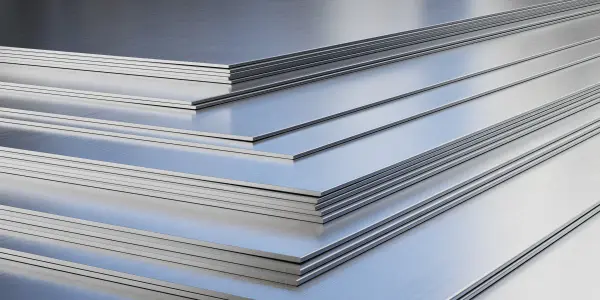
| ASTM B209 | Aluminium Alloy Sheet & Plate | Primary standard for AA5083 plate and sheet — specifies H116, H321, O and H32 tempers for marine and structural use |
| ASTM B928 | Marine Sheet & Plate — Supplementary | Mandatory for marine use — specifies sensitisation testing per ASTM G67 (NAMLT test) for AA5083, AA5086, AA5454 |
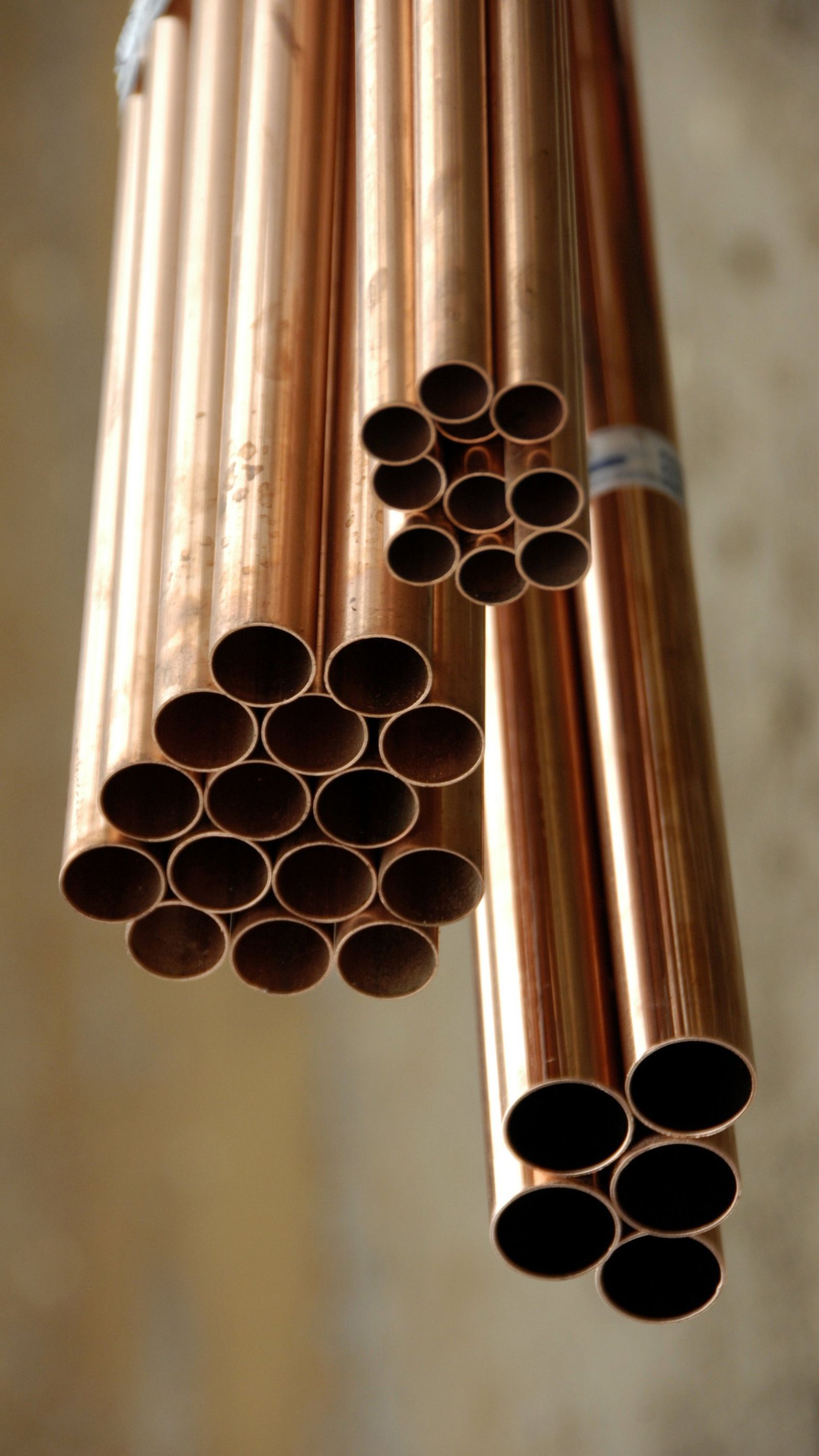
| ASTM B241 | Aluminium Alloy Seamless Pipe & Tube | AA5083 pipes and tubes for structural, marine and pressure vessel applications |
| ASTM B221 | Aluminium Alloy Extruded Bars, Rods, Profiles | AA5083 extruded structural shapes, rounds, hex, flat bars and profiles |
| ASTM B210 | Aluminium Alloy Drawn Seamless Tubes | AA5083 precision drawn tubes for instrumentation and hydraulic applications |
| ASTM B211 | Aluminium Alloy Bar, Rod & Wire | AA5083 round bars and rods for machining fasteners and marine structural pins |
| ASTM B247 | Aluminium Alloy Die and Hand Forgings | AA5083 forgings for structural frames, flanges and marine hardware |
| ASTM G67 | NAMLT Sensitisation Test | Referenced by ASTM B928 — 24-hour nitric acid mass loss test for AA5083 marine plate qualification |
| EN 485-1/2 | Aluminium Sheet, Strip & Plate | EN AW-5083 (AlMg4.5Mn0.7) plate in H111, H116, H321 and O tempers — European market standard |
| EN 573-1/3 | Chemical Composition of Al Alloys | EN AW-5083 composition specification — European alloy designation system |
| EN 754-1/2 | Cold Drawn Aluminium Tubes | EN AW-5083 drawn tubes for structural and marine service — European standard |
| EN 755-1/2 | Extruded Aluminium Tubes, Bars & Profiles | EN AW-5083 extruded pipe, tube and profiles — European standard for marine extrusions |
| DIN 1745 | Aluminium Sheet & Strip | AlMg4.5Mn (DIN equivalent of AA5083) plate and sheet for German market |
| DIN 1746 | Aluminium Tube | AlMg4.5Mn seamless and drawn tubes per German standard |
| DIN 1747 | Aluminium Profiles & Bars | AlMg4.5Mn extruded structural profiles |
| BS 1470 | Wrought Aluminium Sheet, Strip & Plate | N8 (BS designation for AA5083) plate in various tempers — British Standard for marine plate |
| BS 1471 | Aluminium Tubes | N8 (AA5083) seamless tubes per British Standard |
| BS 1472 | Aluminium Forgings | N8 (AA5083) die forgings for marine structural components |
| BS 1475 | Aluminium Wire | AA5083 / N8 wire for structural applications |
| JIS H4000 | Aluminium & Alloy Sheet & Plate | A5083 plate and sheet — Japanese standard (JIS H4000 A5083P) |
| JIS H4040 | Aluminium & Alloy Bars & Rods | A5083 round, square and hex bar per Japanese standard |
| JIS H4080 | Aluminium & Alloy Extruded Tubes | A5083 extruded pipes and tubes per JIS standard |
| IS 733 | Wrought Aluminium Bars, Rods & Sections | Indian Standard for AA5083 equivalent bars and structural sections |
| IS 737 | Wrought Aluminium Sheet & Strip | Indian Standard for AA5083 sheet and plate — IS 737 Grade 24345 (marine) |
| ISO 6361 | Wrought Aluminium Sheet, Strip & Plate | International standard covering AA5083 plate in all tempers including H116 |
| AWS A5.10 | Aluminium Welding Filler Wire | ER5183 filler — recommended for welding AA5083 in marine applications |
| ASME B16.5 | Pipe Flanges | AA5083 aluminium flanges — Class 150 to 2500 for pressure vessel and marine piping |
| ASME B16.9 | Wrought Fittings | AA5083 aluminium elbows, tees and reducers for marine and cryogenic piping |
Product Forms & Standards Matrix — AA5083 from Melta Alloys
| Product | Tempers Available | Key Standards |
|---|---|---|
| Marine Hull Plate | H116, H321, O | ASTM B209 + ASTM B928 EN 485 BS 1470 N8 JIS H4000 A5083P IS 737 |
| Structural Plate (Offshore, Pressure Vessel) | H111, H116, O | ASTM B209 ASME SB209 EN 485 ISO 6361 |
| Seamless Pipes & Tubes | O, F, H111 | ASTM B241 ASTM B210 EN 754 EN 755 BS 1471 JIS H4080 |
| Extruded Bars, Rods & Profiles | F, H111 | ASTM B221 ASTM B211 EN 755 DIN 1747 BS 1472 IS 733 |
| Forgings (Frames, Flanges) | O, H111 | ASTM B247 ASME B16.5 EN 1092-1 |
| Fittings (Elbows, Tees) | — | ASME B16.9 EN 1092-1 |
Marine & Offshore Applications of AA5083
- Ship hull plating: High-speed ferries, patrol boats, naval vessels, workboats — H116 per ASTM B209 + ASTM B928
- Offshore platform decking and grating: AA5083 extruded grating profiles — lighter than steel, maintenance-free
- Liquefied Natural Gas (LNG) storage tanks: AA5083 retains ductility at cryogenic temperatures (−196°C) — used for inner containment shells
- Pressure vessels: AA5083 is one of the few aluminium alloys approved for ASME Section VIII pressure vessel construction
- Subsea structural components: Remotely operated vehicle (ROV) frames, thruster housings, sensor housings
- Hatch covers, wheelhouses and superstructures: AA5083 plate and extrusions for topside weight reduction
- Fuel and ballast tanks: AA5083 sheet in H116 temper for seawater ballast tanks and marine fuel storage
- Armour plating (military): AA5083 H131 and H116 per MIL-DTL-46027 for marine vehicle armour
Frequently Asked Questions
What is the difference between AA5083 H116 and H321?
Both H116 and H321 designate AA5083 plate that has been strain-hardened and thermally stabilised to ensure low sensitisation. They have identical minimum mechanical property requirements per ASTM B209. The difference is in the production route: H116 is produced by controlled cold work; H321 is produced by cold work followed by a stabilisation anneal at 120–175°C. ASTM B928 requires sensitisation testing for both tempers used in marine service.
Why can't I use AA6061 or AA7075 for marine hull plating?
AA6061-T6 suffers from significant heat-affected zone softening during welding (HAZ strength drops to ~55% of parent), making large welded panels impractical for structural marine applications. AA7075-T6 has excellent strength but very poor stress corrosion cracking resistance in seawater — it is never used for marine hull applications in direct seawater contact.
Does Melta Alloys supply AA5083 in ASTM B209 H116 with ASTM B928 certification?
Yes — Melta Alloys supplies AA5083 plate in ASTM B209 H116 and H321 tempers with full ASTM B928 compliance, including NAMLT (ASTM G67) sensitisation test reports. We also supply to EN 485, BS 1470, JIS H4000 and IS 737 as required by destination market.