
Introduction — Two Alloys, One Mission
In the world of marine and industrial engineering, choosing the wrong brass alloy can lead to catastrophic failure through dezincification, stress corrosion cracking or rapid wall thinning — all within months of commissioning. Two copper-zinc alloys are specifically engineered to resist these failure modes in aggressive environments: Naval Brass and Admiralty Brass.
Both belong to the broader family of inhibited brass alloys, and both are designed to perform where ordinary brass grades like C26000 Cartridge Brass (70/30), C27000 Yellow Brass (65/35) or C28000 Muntz Metal (60/40) would fail. However, Naval Brass and Admiralty Brass solve different problems through different alloy chemistries, and selecting the wrong one for your application carries significant consequences.
This article provides a comprehensive technical comparison of Naval Brass C46400 and Admiralty Brass C44300 — covering alloy chemistry, mechanical properties, all relevant international standards (ASTM, EN, DIN, BS, JIS, IS, ISO), available product forms, and the specific industrial applications where each alloy is the correct choice.
Naval Brass (C46400) is the preferred choice for structural marine components — shafts, valve bodies, fasteners and piping in seawater circuits where mechanical strength matters. Admiralty Brass (C44300) is the standard for heat exchanger and condenser tubing — thin-walled, high-surface-area applications in power plants, desalination and process industries where heat transfer and dezincification resistance are paramount.
What Is Naval Brass? Grades C46200, C46400, C46500
Naval Brass is a copper-zinc-tin alloy in which the addition of approximately 0.75% tin to the Muntz Metal base composition dramatically improves resistance to dezincification in seawater. The "Naval" designation reflects its long-standing use in shipbuilding and marine engineering, where it has been the material of choice for over a century.
Naval Brass UNS Grades
Naval Brass
- Cu: 62.0–65.0%, Sn: 0.50–1.0%, Zn: Remainder
- Lower copper content variant
- Cost-effective for general marine use
- Good machinability and dezinc resistance
Naval Brass (Primary Grade)
- Cu: 59.0–62.0%, Sn: 0.50–1.0%, Zn: Remainder
- Most widely specified Naval Brass grade
- Excellent strength + dezincification resistance
- Standard per ASTM B21, ASTM B111
Naval Brass (As Grade)
- Cu: 59.0–62.0%, Sn: 0.50–1.0%, As: 0.02–0.06%, Zn: Remainder
- Arsenic-inhibited for enhanced dezincification resistance
- Used in particularly aggressive seawater environments
- Preferred for hot seawater service above 50°C
Comparable International Grades
- EN CW712R — European Naval Brass Rod/Bar (EN 12163, EN 12164)
- BS 2872 CZ112 — British Naval Brass forgings
- DIN 17660 CuZn39Sn1 — German Naval Brass strip
- JIS H3250 C4641 — Japanese Naval Brass rod
- IS 291 — Indian Standard for Naval Brass

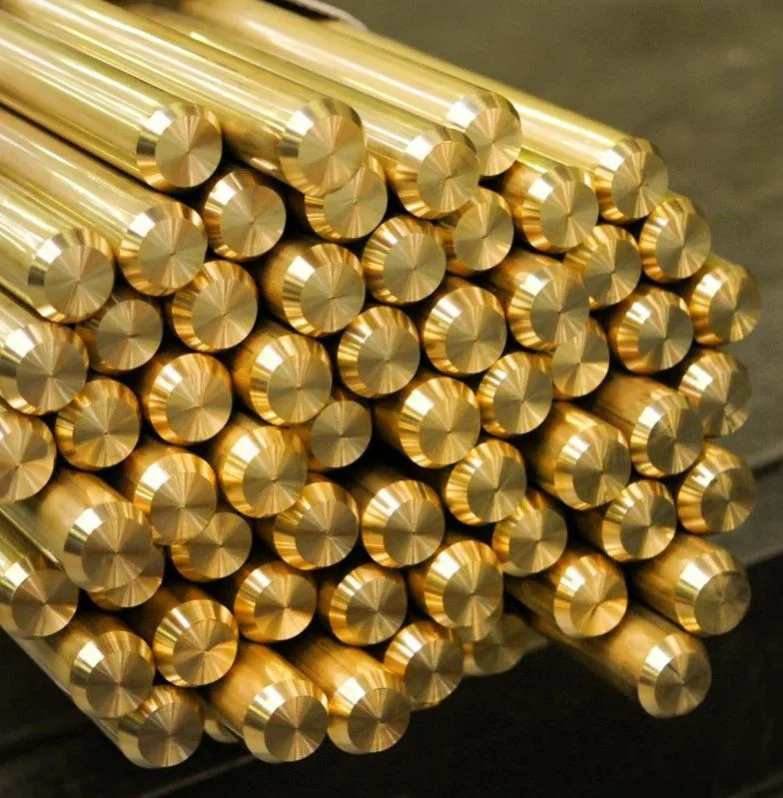
Naval Brass C46400 seamless pipes manufactured to ASTM B21 — for marine seawater piping, propeller shaft sleeves and valve bodies
What Is Admiralty Brass? Grades C44300, C44400, C44500
Admiralty Brass — also called Inhibited Admiralty Brass or Arsenical Admiralty Brass — is a copper-zinc-tin alloy with a higher copper-to-zinc ratio than Naval Brass and a small addition of arsenic, phosphorus or antimony that inhibits the dezincification process at the microstructural level. The alloy takes its name from its original specification by the British Admiralty for condenser tubing in Royal Navy warships.
Admiralty Brass UNS Grades
C44300 Arsenical Admiralty Brass (Primary Grade)
- Cu: 70.0–73.0%, As: 0.02–0.06%, Sn: 0.9–1.2%, Zn: Remainder
- Most widely used Admiralty Brass worldwide
- Arsenic addition inhibits dezincification
- Standard per ASTM B111, ASTM B395
C44400 Antimonial Admiralty Brass
- Cu: 70.0–73.0%, Sb: 0.02–0.10%, Sn: 0.9–1.2%, Zn: Remainder
- Antimony used as inhibitor instead of arsenic
- Environmental compliance where As is restricted
- Equivalent corrosion performance to C44300
C44500 Phosphorised Admiralty Brass
- Cu: 70.0–73.0%, P: 0.02–0.10%, Sn: 0.9–1.2%, Zn: Remainder
- Phosphorus inhibitor — excellent for freshwater cooling circuits
- Higher deoxidation level than arsenical grade
- Used where arsenic and antimony are prohibited
Comparable International Grades
- EN CW706R — Arsenical Admiralty Brass (EN 12449, EN 12450)
- BS 2871 CZ111 — British Admiralty Brass tubes
- DIN 17664 CuZn28Sn1As — German Admiralty Brass strip
- JIS H3300 C4430 — Japanese Admiralty Brass tube
- IS 1545 — Indian Standard for condenser tubes
Chemical Composition Comparison
The two alloys differ fundamentally in their copper-to-zinc ratio, which directly affects their microstructure, strength, corrosion behaviour and suitability for different fabrication processes. The table below provides a direct comparison:
| Element | Naval Brass C46400 | Admiralty Brass C44300 |
|---|---|---|
| Copper (Cu) | 59.0 – 62.0% | 70.0 – 73.0% |
| Zinc (Zn) | Remainder (~38–40%) | Remainder (~26–28%) |
| Tin (Sn) | 0.50 – 1.00% | 0.90 – 1.20% |
| Arsenic (As) — C44300 / C46500 | 0.02–0.06% (C46500 only) | 0.02 – 0.06% (C44300) |
| Antimony (Sb) — C44400 | — | 0.02 – 0.10% (C44400) |
| Phosphorus (P) — C44500 | — | 0.02 – 0.10% (C44500) |
| Lead (Pb) max | 0.20% | 0.07% |
| Iron (Fe) max | 0.10% | 0.06% |
| Alloy Family | Alpha-Beta Brass | Alpha Brass |
| Microstructure | Duplex α+β phase | Single α phase |
The higher zinc content in Naval Brass (C46400) creates a duplex alpha-beta microstructure, which gives it higher tensile strength but also makes it more susceptible to dezincification in the beta phase — which is why tin (and optionally arsenic in C46500) is added. Admiralty Brass (C44300) has a lower zinc content resulting in a single-phase alpha microstructure, which is inherently more dezincification-resistant and better suited to cold working into thin-walled tubing.
Mechanical Properties — Side by Side
| Property | Naval Brass C46400 | Admiralty Brass C44300 |
|---|---|---|
| Tensile Strength (UTS) | 380 – 620 MPa (55 – 90 ksi) | 310 – 480 MPa (45 – 70 ksi) |
| Yield Strength (0.2% offset) | 170 – 450 MPa | 100 – 350 MPa |
| Elongation (min.) | 15 – 35% | 30 – 55% |
| Hardness (Rockwell) | 55–85 HRB | 40–75 HRB |
| Hardness (Vickers) | 120–190 HV | 75–150 HV |
| Elastic Modulus | ~100 GPa | ~105 GPa |
| Thermal Conductivity | ~120 W/m·K | ~150 W/m·K |
| Density | 8.41 g/cm³ | 8.53 g/cm³ |
| Machinability Rating | 30% (vs C36000 = 100%) | 30% |
| Cold Workability | Good | Excellent |
| Hot Workability | Excellent (forging grade) | Limited |
| Typical Tempers Available | M20 (as-extruded), H58 (drawn) | O60 (annealed), H55, H80, H85 |
| Weldability | Fair — requires precautions | Good with proper filler |
| Dezincification Resistance | Good (Excellent in C46500) | Excellent |
| Service Temperature Max | ~200°C continuous | ~200°C continuous |
Understanding Dezincification and How Both Alloys Resist It
Dezincification is a selective corrosion process in which zinc is preferentially dissolved from the copper-zinc alloy matrix, leaving behind a porous, weak, copper-rich residue that has lost most of the original alloy's mechanical strength. The corroded layer appears reddish (like copper) and is visually distinguishable, but may remain dimensionally intact while being structurally useless — leading to sudden failures under pressure.
Which Brass Alloys Are Vulnerable?
All standard brass alloys with zinc content above approximately 15% are potentially susceptible to dezincification under the right conditions. This includes widely used grades like:
- C26000 Cartridge Brass (70/30) — moderate risk in stagnant or slow-flowing water
- C27000 Yellow Brass (65/35) — higher risk than 70/30
- C28000 Muntz Metal (60/40) — highest risk; duplex structure attacks preferentially at beta phase
- C33000–C38500 Leaded Brass series — free-cutting grades like C36000 are highly susceptible in water service
How Naval Brass Resists Dezincification
In Naval Brass C46400, the tin addition (0.5–1.0%) suppresses the dezincification of the beta phase by altering the local electrochemical behaviour of the alloy. Tin preferentially concentrates at the interface between the alpha and beta phases, acting as a cathodic inhibitor that slows zinc dissolution. In the arsenic-inhibited variant C46500, the arsenic addition further suppresses dezincification — making this the preferred grade for high-temperature seawater applications (above 50°C) or high-velocity flow conditions.
How Admiralty Brass Resists Dezincification
In Admiralty Brass C44300, dezincification resistance is achieved through two mechanisms simultaneously: first, the higher copper content (70–73%) creates a single-phase alpha microstructure that is intrinsically more resistant than the duplex structure of higher-zinc alloys; second, the arsenic addition (0.02–0.06%) in C44300 acts as an inhibitor at the grain boundaries, preventing zinc from migrating to the surface even under prolonged exposure to aggressive cooling water. The British Standards Institution (BSI) has historically specified BS 2871 CZ111 for this alloy specifically because of these combined protective mechanisms.
Both Naval Brass and Admiralty Brass should be tested per ISO 6509-1:2014 (the standard dezincification test method) to verify resistance. Melta Alloys supplies all inhibited brass products with dezincification test reports available on request alongside the standard Mill Test Certificate.
International Standards: ASTM, EN, DIN, BS, JIS, IS, ISO
Naval Brass and Admiralty Brass are manufactured to a wide range of international standards depending on the product form and destination market. Below is a comprehensive reference covering all major standards applicable to these two alloys.
ASTM Standards (USA — Most Widely Referenced Globally)
| Standard | Product Form | Applicability |
|---|---|---|
ASTM B21 | Rod, Bar & Shapes | Naval Brass C46200, C46400, C46500 — the primary ASTM rod/bar standard for Naval Brass |
ASTM B111 | Seamless Condenser Tubes & Ferrule Stock | Both Naval Brass C46400 and Admiralty Brass C44300, C44400, C44500 — the definitive standard for heat exchanger and condenser tubing |
ASTM B135 | Seamless Brass Tube | General purpose brass tubes including Naval Brass and Admiralty Brass grades |
ASTM B587 | Electric Resistance Welded Brass Tube | ERW tubes in Naval and Admiralty Brass for non-critical fluid service |
ASTM B251 | General Requirements — Copper & Alloy Tube | Umbrella requirements applying to ASTM B111, B135, B395; covers Naval and Admiralty Brass tube |
ASTM B395 | U-Bend Heat Exchanger Tubes | Admiralty Brass C44300, C44400, C44500 — pre-bent U-tubes for shell-and-tube heat exchangers |
ASTM B36 | Plate, Sheet, Strip & Rolled Bar | Naval Brass and Admiralty Brass plates and sheets in all three inhibitor variants |
ASTM B569 | Brass Strip | Narrow strip in Admiralty Brass and Naval Brass for stamping and forming operations |
ASTM B124 / ASME SB124 | Forging Rod, Bar & Shapes | Forging stock in Naval Brass C46400 — combined ASTM/ASME designation for pressure vessel use |
ASTM B283 | Brass Die Forgings | Die forgings in Naval Brass — valve bodies, flanges, fittings manufactured by hot forging |
ASTM B16 | Free-Cutting Brass Rod, Bar & Shapes | Applicable to leaded brass grades (C36000); referenced for comparison in machined Naval Brass components |
ASTM B584 | Copper Alloy Sand Castings | Cast Naval and Admiralty Brass components — pump housings, valve bodies, impellers |
ASTM B505 | Continuous Cast Brass Products | Continuous cast Naval Brass rod and tube stock for bearings and machined components |
ASTM B271 | Centrifugal Brass Castings | Centrifugally cast Naval Brass cylinders, sleeves and bearing housings |
European Standards (EN) — Germany, UK & EU Markets
| Standard | Product Form | Note |
|---|---|---|
EN 12449 | Seamless Round Tubes | Primary European tube standard covering Naval Brass CW712R and Admiralty Brass CW706R |
EN 12450 | Seamless Round Tubes (drawn) | Drawn copper-alloy tubes — covers precision Admiralty Brass tubes for heat exchangers |
EN 12163 | Rods for General Purposes | Naval Brass rod stock in European designation CW712R |
EN 12164 | Rods for Free Machining | Machining-grade Naval Brass rod; CW712R with tight dimensional tolerance |
EN 12165 | Wrought & Unwrought Forgings | Naval Brass die and free forgings — pump bodies, valve components per European standard |
EN 12167 | Profiles & Rectangular Bars | Extruded Naval Brass profiles for structural and architectural applications |
EN 12166 | Wire | Admiralty Brass wire for mesh, spring and electrical contact applications |
EN 1652 | Plate, Sheet, Strip & Circles | Naval and Admiralty Brass sheet and plate; Admiralty Brass strip for condenser tube sheets |
EN 1982 | Castings | Cast Naval and Admiralty Brass components per European foundry standard |
DIN Standards (Germany)
| Standard | Product Form / Application |
|---|---|
DIN 17660 | Copper-zinc alloy strip and sheet — covers Admiralty Brass CuZn28Sn1As |
DIN 17661 | Copper-zinc alloy rods and bars — Naval Brass CuZn39Sn1 |
DIN 17662 | Copper-zinc alloy wire |
DIN 17663 | Copper-zinc alloy forgings and forging stock |
DIN 17664 | Copper-zinc alloy tube — Admiralty Brass condenser tubes CuZn28Sn1As |
DIN 1785 | Copper-zinc alloy seamless tubes for heat exchangers |
BS Standards (United Kingdom)
| Standard | Product / Designation |
|---|---|
BS 2870 | Rolled copper & copper alloys — sheet, strip and foil; covers CZ111 Admiralty Brass sheet |
BS 2871 | Copper & alloy tubes — Part 3 covers condenser/heat exchanger tubes in CZ111 (Admiralty) and CZ112 (Naval) |
BS 2872 | Copper & alloy forgings — Naval Brass CZ112 forgings for marine hardware |
BS 2874 | Copper & alloy rods and sections — Naval Brass CZ112 round, hex and flat bar |
BS 2875 | Copper & alloy plate — Admiralty Brass CZ111 and Naval Brass CZ112 plates for marine engineering |
BS 1400 | Copper alloy ingots and castings — sand and centrifugal cast Naval and Admiralty Brass |
JIS Standards (Japan)
| Standard | Product Form | Grade |
|---|---|---|
JIS H3100 | Brass & high copper alloy sheet & plate | C4430 (Admiralty), C4461 (Naval Brass) |
JIS H3250 | Copper & copper alloy rod & bar | C4641 (Naval Brass), C4430 (Admiralty) |
JIS H3300 | Copper & copper alloy seamless tubes | C4430 (Admiralty Brass condenser tube), C4461 (Naval Brass) |
JIS H3400 | Copper & copper alloy sheet & strip | Admiralty and Naval Brass strip |
JIS H5111 | Copper alloy castings | Cast Naval and Admiralty Brass components |
Indian Standards (IS) and ISO Standards
| Standard | Product / Application |
|---|---|
IS 319 | Free cutting brass bars, rods and sections — reference for comparison with machined Naval Brass |
IS 291 | Copper-zinc alloy (brass) rods — covers Naval Brass rods for Indian market |
IS 2501 | Wrought copper & copper alloy forgings — Naval Brass die forgings per Indian standard |
IS 4170 | Brass sheet and strip — Admiralty Brass sheet for Indian industrial applications |
IS 407 | Copper & copper alloy seamless tubes — covers Naval and Admiralty Brass tubes manufactured in India |
IS 4413 | Copper alloy flanges — Naval Brass flanges to Indian standard |
ISO 1634 | Copper alloy strip & sheet — international Admiralty Brass sheet specification |
ISO 274 | Copper alloy seamless round tubes — Naval and Admiralty Brass tube per ISO |
ISO 431 | Copper alloy rod & bar — Naval Brass rod per international standard |
ISO 197 | Copper & copper alloys terminology — reference for alloy designation and nomenclature |
Available Product Forms and Applicable Standards
Both Naval Brass and Admiralty Brass are available in a complete range of industrial product forms. Below is a comprehensive matrix of product types, available grades and the primary standards applicable to each — as supplied by Melta Alloys.
| Product Form | Naval Brass Grades | Admiralty Brass Grades | Key Standards |
|---|---|---|---|
| Seamless Pipes & Tubes | C46200, C46400, C46500 | C44300, C44400, C44500 | ASTM B111 ASTM B135 ASTM B251 EN 12449 EN 12450 JIS H3300 DIN 1785 BS 2871 IS 407 |
| ERW / Welded Tubes | C46400 | C44300 | ASTM B587 |
| U-Bend Tubes | C46400 (limited) | C44300, C44400, C44500 | ASTM B395 EN 12449 |
| Round Bars & Rods | C46200, C46400, C46500 | C44300 (limited) | ASTM B21 ASTM B124 EN 12163 EN 12164 JIS H3250 BS 2874 IS 291 ISO 431 |
| Hex Bars | C46400 | C44300 (limited) | ASTM B21 EN 12163 BS 2874 |
| Flat Bars & Profiles | C46400 | C44300 | ASTM B36 EN 12167 JIS H3250 |
| Plates (3mm+) | C46400 | C44300, C44400, C44500 | ASTM B36 EN 1652 JIS H3100 BS 2875 IS 4170 ISO 1634 |
| Sheets (<3mm) | C46400 | C44300, C44400, C44500 | ASTM B36 EN 1652 BS 2870 JIS H3100 |
| Strip & Coil | C46400 (limited) | C44300, C44400, C44500 | ASTM B569 EN 1652 JIS H3400 DIN 17660 |
| Die Forgings | C46400, C46500 | C44300 (uncommon) | ASTM B283 ASTM B124 EN 12165 DIN 17663 BS 2872 IS 2501 |
| Sand & Continuous Castings | C46400 equivalent | C44300 equivalent | ASTM B584 ASTM B505 ASTM B271 EN 1982 BS 1400 JIS H5111 |
| Weld-Neck Flanges | C46400 | C44300 | ASME B16.5 ASME B16.47 EN 1092-1 DIN 2501 BS 10 JIS B2220 IS 4413 |
| Slip-On, Blind, Threaded Flanges | C46400 | C44300 | ASME B16.5 EN 1092-1 DIN 2501 JIS B2220 |
| Wrought Fittings (Elbows, Tees, Reducers) | C46400 | C44300 | ASME B16.22 ASME B16.18 ASME B16.15 MSS SP-104 MSS SP-110 ISO 4144 BS EN 1254 |
Applications — Where Each Alloy Excels
Naval Brass C46400 — Primary Applications
Naval Brass excels wherever structural integrity, machinability and resistance to seawater corrosion must coexist. Its higher strength from the duplex microstructure makes it suitable for load-bearing and pressure-containing components.
Marine Propulsion
Propeller shaft sleeves, rudder pintles, stern tube bushings, propeller hub components — Naval Brass C46400 per ASTM B21 and BS 2874 CZ112.
Marine Valves & Fittings
Sea chest valves, seacock bodies, valve stems, gland nuts — forged Naval Brass per ASTM B283, BS 2872 CZ112, EN 12165.
Offshore & Subsea Hardware
Deck fittings, bollards, fairleads, hull penetration pieces, structural plates — Naval Brass plates and bar per ASTM B36, BS 2875 CZ112.
Marine Fasteners
Bolts, nuts, studs, threaded rod, coach screws for marine superstructures and hull fittings — Naval Brass hex bar per ASTM B21, EN 12163 CW712R.
Seawater Piping Systems
Seawater cooling lines, ballast piping, bilge systems — Naval Brass seamless pipes per ASTM B135, EN 12449 CW712R, JIS H3300 C4641.
Pump Impellers & Casings
Centrifugal pump impellers, casings and wear rings for seawater service — cast per ASTM B584, ASTM B271, EN 1982, BS 1400.
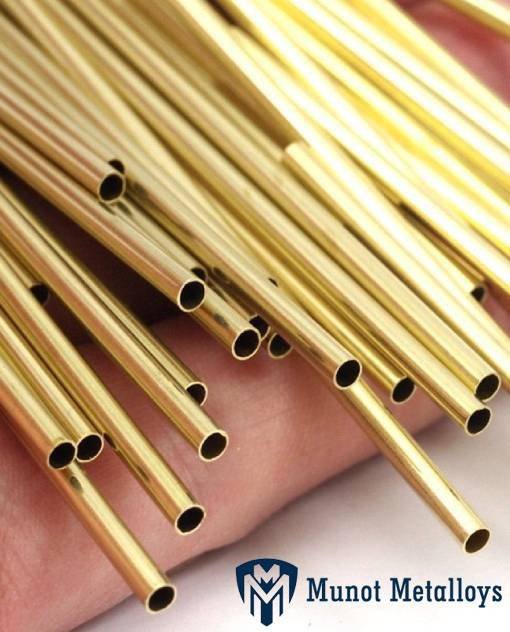
Admiralty Brass C44300 condenser tubes manufactured to ASTM B111 — the preferred material for shell-and-tube heat exchangers and power plant condensers
Admiralty Brass C44300 — Primary Applications
Admiralty Brass dominates in heat transfer applications where thin walls, high surface-area geometry, large-volume tube bundles and aggressive cooling water demand the ultimate in dezincification resistance and thermal conductivity.
Shell & Tube Heat Exchangers
The global standard for condenser and heat exchanger tubing — Admiralty Brass C44300 per ASTM B111, ASTM B395 (U-tubes), DIN 1785, JIS H3300 C4430.
Power Plant Condensers
Steam condensers in coal, gas and nuclear power stations — Admiralty Brass tubes per ASTM B111, BS 2871 CZ111, EN 12449 CW706R.
Desalination Plants (MSF & MED)
Multi-stage flash and multi-effect distillation tubing — Admiralty Brass C44300 provides excellent brine corrosion resistance at low temperatures.
Chemical & Petrochemical Coolers
Process fluid coolers, acid coolers (compatible concentrations), solvent condensers — Admiralty Brass C44300/C44400 tubes and tube sheets per ASTM B111.
HVAC & Refrigeration
Chiller condenser tubes, evaporator coils and cooling tower circuits where freshwater and brackish water systems are involved — per EN 12449, ASTM B135.
Marine Heat Exchangers
Ship main condenser and auxiliary cooling service — Admiralty Brass C44300 per ASTM B111, BS 2871 CZ111, JIS H3300 C4430.
Selection Guide — Which One Should You Choose?
The following decision matrix will help engineers and procurement professionals select the correct alloy for their application in under 60 seconds:
| Requirement / Condition | Choose Naval Brass C46400 | Choose Admiralty Brass C44300 |
|---|---|---|
| Application type | Structural, mechanical, pressure-containing | Heat transfer, thin-wall tubing, tube bundles |
| Wall thickness | Thick-wall (schedule pipes, bars, forgings) | Thin-wall (0.5–2.5mm BWG condenser tubes) |
| Mechanical strength priority | ✔ High — UTS up to 620 MPa | Lower — UTS up to 480 MPa |
| Heat transfer priority | Secondary | ✔ Primary — higher thermal conductivity |
| Seawater service (structural) | ✔ Ideal — shafts, valves, pipework | Suitable in tube form only |
| Seawater cooling (tube side) | Acceptable | ✔ Preferred — superior dezincification resistance |
| Freshwater / brackish water cooling | Suitable | ✔ Excellent — consider C44500 for freshwater |
| Forgeability | ✔ Excellent — hot forging grade | Limited — cold working preferred |
| Cold workability | Good | ✔ Excellent — ideal for drawn tubes and strip |
| U-tube bending (heat exchangers) | Not recommended | ✔ Standard per ASTM B395 |
| Primary standard reference | ASTM B21 (rod), ASTM B135 (tube) | ASTM B111 (tube), ASTM B395 (U-tubes) |
| Temperature above 50°C in seawater | Use C46500 (As-inhibited) | C44300 preferred |
| European market specification | EN 12163/12164/12165 CW712R | EN 12449/12450 CW706R |
| Typical cost comparison | Lower per kg (less copper) | Higher per kg (more copper) |
When specifying Naval Brass for temperatures above 50°C in seawater service, or in stagnant/low-velocity conditions, always upgrade to C46500 (arsenical Naval Brass) or consider switching to Aluminium Brass (CuZn20Al2As) or Cupro-Nickel (C70600 / C71500) for superior long-term dezincification protection. When specifying Admiralty Brass for power plant condenser service above 60°C, review BS 2871 Part 3 and ASTM B111 for the appropriate BWG wall thickness — and ensure the shell-side fluid chemistry is within the alloy's tolerance limits.
Related Brass Grades Worth Knowing
Naval and Admiralty Brass exist within a wider family of specialised copper-zinc alloys. Engineers working in marine and industrial environments should also be familiar with these related grades:
| UNS Grade | Common Name | Key Feature | Typical Use |
|---|---|---|---|
C26000 | Cartridge Brass (70/30) | Excellent cold workability; not dezincification-resistant | Ammunition cases, plumbing fittings, fasteners |
C27000 | Yellow Brass (65/35) | General purpose; dezincification risk in water | Locks, hardware, plumbing valves (potable water: use inhibited grade) |
C28000 | Muntz Metal (60/40) | High strength; highest dezincification risk in standard brass | Architectural sheet, condenser plates (replace with Naval/Admiralty in water service) |
C36000 | Free Cutting Brass | Best machinability; not corrosion resistant per ASTM B16 | CNC turned parts, valve bodies (potable water: choose DZR grade) |
C37700 | Forging Brass | Excellent hot forgeability per ASTM B124 | Valves, fittings, hardware forgings (not marine/seawater) |
C38500 | Architectural Bronze (Brass) | Warm golden colour; ASTM B36 | Decorative panels, door hardware, trim |
C46200 | Naval Brass (low Cu) | Lower copper variant; ASTM B21 | Marine hardware where cost is a priority |
C46500 | Arsenical Naval Brass | Enhanced dezinc resistance; ASTM B21 | Hot seawater service above 50°C |
C44400 | Antimonial Admiralty Brass | Sb inhibitor; ASTM B111 | Where As is restricted; same performance as C44300 |
C44500 | Phosphorised Admiralty Brass | P inhibitor; ASTM B111 | Freshwater cooling circuits; As/Sb-free environments |
C67820 | High-Tensile Brass (HTB3) | Mn-Al-Fe additions; very high strength | Marine gears, propeller hubs, hydraulic cylinder rods |
How to Specify and Order Naval or Admiralty Brass from Melta Alloys
When enquiring for Naval Brass or Admiralty Brass products, providing the following information will allow Melta Alloys to confirm material availability, applicable standards compliance and prepare an accurate quote:
- UNS Grade: C46400 or C46500 (Naval Brass) / C44300, C44400 or C44500 (Admiralty Brass)
- Applicable Standard: e.g. ASTM B111, ASTM B21, EN 12449, BS 2871, JIS H3300, DIN 1785
- Product Form: Seamless Tube / Pipe / Rod / Bar / Plate / Sheet / Flange / Fitting / Forging
- Dimensions: OD (or NPS), Wall Thickness (or BWG/SWG), Length (or coil weight)
- Temper / Condition: Annealed (O60), Hard Drawn (H55, H80), As-Extruded (M20), Forged
- Quantity: kg, metric tonnes, number of pieces or lengths
- Test Requirements: Mill Test Certificate, 3rd Party Inspection, Hydrostatic Test, Dezincification Test (ISO 6509-1)
- End Use: Heat exchanger, marine seawater, power plant condenser, valve body, etc.
- Delivery Terms: Ex-Works / FOB / CIF — destination port and country
All Naval Brass and Admiralty Brass products from Melta Alloys are supplied with full Mill Test Certificates (MTC) per EN 10204 Type 3.1 showing chemical analysis (spectrometric), mechanical test results (tensile, elongation, hardness), dimensional inspection, and heat/lot number traceability. Third-party inspection by SGS, Bureau Veritas, TÜV, or any client-nominated agency can be arranged for all shipments.
Frequently Asked Questions
Is Naval Brass the same as Admiralty Brass?
No. While both are inhibited copper-zinc-tin alloys used in marine and industrial environments, they differ significantly in copper content, zinc content, microstructure, mechanical strength and primary application. Naval Brass (C46400) has a higher zinc content (~38–40%) giving it a duplex structure and higher strength, while Admiralty Brass (C44300) has a lower zinc content (~26–28%) giving it a single-phase structure better suited to thin-wall tube drawing and heat transfer applications.
Can Naval Brass tubes be used in heat exchangers instead of Admiralty Brass?
Naval Brass tubes are not the standard choice for heat exchanger and condenser tubing. Admiralty Brass (C44300 per ASTM B111) offers superior dezincification resistance for thin-wall condenser duty, better cold drawability for precise wall dimensions, and higher thermal conductivity. Naval Brass tubes do appear in some marine heat exchanger applications where mechanical strength is more important than surface-area efficiency, but for power plant condensers and process coolers, Admiralty Brass is always the first specification.
Which standard governs heat exchanger tubing — ASTM B111, ASTM B135 or ASTM B395?
ASTM B111 covers seamless condenser tubes and ferrule stock in copper and copper alloys, including both Admiralty Brass C44300 and Naval Brass C46400 — it is the primary standard for heat exchanger tubing. ASTM B395 covers U-bend tubes specifically (pre-bent U-tubes for use in U-bundle heat exchangers) in the same alloys. ASTM B135 covers seamless brass tubes for general service, including Naval and Admiralty Brass, but without the specific OD/wall combinations and condenser-specific requirements of B111.
What does "inhibited" mean in inhibited Admiralty Brass?
"Inhibited" refers to the addition of a small amount of a third element — arsenic (As) in C44300, antimony (Sb) in C44400, or phosphorus (P) in C44500 — that inhibits the dezincification corrosion mechanism at the microstructural level. Without these inhibitors, Admiralty Brass (which would simply be CuZn29Sn1) would be susceptible to dezincification in cooling water service despite its lower zinc content.
What is the difference between BS 2871 CZ111 and ASTM B111 C44300?
Both specifications cover Admiralty Brass condenser tubing. BS 2871 CZ111 is the British Standard designation, historically used in UK-designed power plants and process plants, and still specified in many international projects with British engineering heritage. ASTM B111 C44300 is the American standard, universally accepted globally. The compositions are essentially equivalent, though tube dimensions (OD, BWG wall thickness) are specified in imperial units in ASTM B111 and metric in BS 2871. Melta Alloys can supply to either standard with a dual-certified MTC on request.
Does Melta Alloys stock Naval Brass and Admiralty Brass ready for export?
Yes. Melta Alloys maintains inventory of Naval Brass C46400 (per ASTM B21 and ASTM B135) in round bars, hex bars, plates and seamless pipes, and Admiralty Brass C44300 (per ASTM B111) in condenser tubes and plates for immediate export from Jamnagar, Gujarat. Custom dimensions, special alloy grades (C46500, C44400, C44500) and non-standard sizes are manufactured to order with typical lead times of 3–8 weeks. Contact our sales team for current stock availability and pricing.
Conclusion
Naval Brass and Admiralty Brass are not interchangeable — they are complementary alloys within the inhibited brass family, each solving a distinct engineering problem:
- Naval Brass C46400 (and its arsenic-inhibited sibling C46500) is your choice when you need a strong, machinable, dezincification-resistant copper alloy for structural marine components, seawater piping, valves, propulsion hardware and fasteners. The governing standards are ASTM B21 (rod/bar), ASTM B135 (tubes), ASTM B283 (forgings), EN 12163 / EN 12164 CW712R (European) and BS 2874 CZ112 (British).
- Admiralty Brass C44300 (and its Sb and P-inhibited siblings C44400 and C44500) is your choice when you need optimal dezincification resistance in a thin-wall, high-surface-area heat transfer product — condenser tubes, heat exchanger bundles, U-tubes and tube sheets for power plants, desalination and process cooling. The governing standards are ASTM B111, ASTM B395, EN 12449 CW706R, BS 2871 CZ111, JIS H3300 C4430 and DIN 1785.
When in doubt about which alloy best suits your specific fluid chemistry, operating temperature and pressure conditions, our metallurgical team at Melta Alloys is available to review your application and recommend the optimal material specification — including full certification, testing and export documentation.